Did you know the average adult has a 25% risk of having a stroke during their lifetime?1 During a stroke, the brain is deprived of oxygen causing brain damage. If caught and treated early, the damage from a stroke can be minimized, but preventing a stroke from occurring in the first place is by far the best solution.
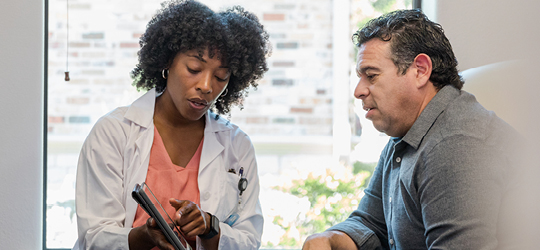
Fortunately, there are actions you can take to reduce your stroke risk. The best place to start is by discussing stroke with your primary care provider to develop a plan to reduce your risk.
The following questions can help you talk to your provider about your personal risk of having a stroke:
- Does my family and/or personal history make me more likely to have a stroke?
- Is there anything you’ve observed so far during my appointment you think increases my risk of experiencing a stroke – such as my weight, cholesterol levels, or blood pressure?
- What dietary and lifestyle choices should I be making to reduce my stroke risk?
- Does diabetes increase my risk of having a stroke?
- Can you tell me a bit about atrial fibrillation (AFib) as a risk factor? How do I know if I have it?
SSM Health St. Mary’s Hospital – Madison is proud to be a thrombectomy-capable certified primary stroke center. We offer advanced technology and staff specially trained to treat stroke when seconds matter. Stroke prevention starts with you; and SSM Health is here to help both understand your risk and provide you with the best possible outcome should you experience a stroke.
Make an appointment with your primary care provider to understand your risk and create a prevention plan.
1 N Engl J Med 2018; 379:2429-2437