Grant Manier’s eco-art showcases the creativity of an artist on the autism spectrum
SSM Health Treffert Center is a haven for neurodivergent families with its state-of-the-art comprehensive, multidisciplinary diagnosis and treatment of autism, behavior, and communication disorders in children and adults.
A couple years ago, it opened SSM Health Treffert Studios, which gives those families many options to express and develop their artistic gifts. SSM Health is committed to accessible, affordable health care to help everyone reach their potential.
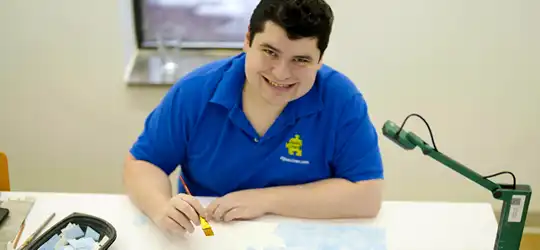
One such young artist who is thriving at SSM Health Treffert Studios is Grant Manier.
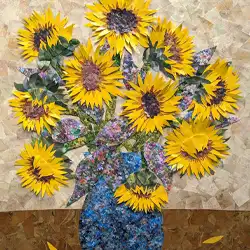
Manier’s art doesn’t just hang on walls; it breathes new life into what the world throws away. Manier transforms discarded magazines, calendars, puzzle pieces, and paper scraps into stunning collages. Known as the Eco-Artist, his work dances between fine art and environmental activism and is as layered in meaning as it is in texture. He merges ecology and creativity in a way that reminds us that beauty often begins where others see waste.
Behind the intricate detail lies a story of resilience and imagination. As an artist on the autism spectrum, Manier’s process reveals the deep connection between neurodiversity and innovation. His art mirrors the way his mind reorganizes complexity into unity, turning limitation into liberation. Each piece is both personal and planetary: a testament to how creativity can become a form of healing and advocacy at once.
Creativity: process and potential
Bryan Mischler, an SSM Health Treffert Center psychotherapist, recently caught up with Manier for a lively Q&A on the mind and mission of the Eco-Artist. We learn how he channels his unique way of seeing the world into art that educates, inspires, and redefines what it means to create responsibly. From inspiration to exhibition, Manier explains how art, environment, and neurodiversity can converge.
Q: Your art transforms recycled materials into breathtaking works. What first inspired you to use “trash” as your primary medium, and how has that evolved over time?
A: I never saw it as trash; I saw it as color and texture. Since I primarily use paper and puzzles in my artwork, the vibrant colors from magazines and calendars first caught my eye and inspired me to create.
Q: Many describe your work as both methodical and magical. Can you walk us through your creative process – from ideas to final collage?
A: #1: Choose the canvas: I start by finding a canvas in the size I want for the piece.
#2: Gather recycled materials: I collect recycled materials, mostly paper and puzzles. Sometimes this step takes months because I may not have the right colors available.
#3: Cut and tear: Then comes the time-consuming part, cutting and tearing the materials into the shapes and sizes I need.
#4: Glue and brush: I glue and brush layer after layer, repeating the process many times, allowing drying time between each step.
#5: Final touches: Once everything is complete and dry, I finish the piece with my signature and a certificate of authenticity.
Q: You’ve often said your art reflects your way of thinking as someone on the autism spectrum. How does your neurodiversity shape the way you see and create?
A: Autism doesn’t define me; it enhances my talents and skills. It gives me the ability to hyperfocus, creating a tunnel vision where I can work from morning until the sun goes down without realizing it.
I also have strong spatial perception. This allows me to see how colors should flow and balance without clustering too much of one shade together. My attention to detail helps me notice even the smallest gaps, and I have the patience to place the tiniest piece of paper exactly where it belongs.
Q: Your pieces spark conversations about both environmental sustainability and human potential. How do you see creativity as a bridge between those two worlds?
A: For me, creativity is the bridge between environmental sustainability and human potential. I have autism, and my creativity allows me to take something others see as trash and turn it into art, giving new life to recycled materials. It’s not just about keeping our planet clean; it’s about showing what people with differences can do when given the chance.
My art has given me a career and an income. And with the support of my mom and the amazing support group around us, I’ve been able to move forward into the future with both a talent and a voice. My mom always looks toward my future and helps me combine creativity with purpose. Together, we show that being neurodiverse and eco-minded can spark change, proving that everyone has a purpose.
Q: What advice would you give to young artists, especially neurodivergent creators, who are still discovering their own voices and materials?
A: The best advice I can give to young adults, especially neurodivergent creators, is the advice I received from Dr. Temple Grandin: Create a portfolio of your work. That portfolio becomes your voice and shows the world what you can do. My mom entered my art into contests early on. Winning awards like Best of Show, Grand Champion, and Advocacy Honors built my confidence and motivated me to keep going.
Another important thing is to have a support group; you can’t do this alone. I’m grateful to my mom and the support network around us. Art comes naturally to me, but the business side has been a learning experience, and my mom has her own support group to help guide her, too. Together, we’ve learned that creativity grows stronger when you have both encouragement and community.
Final touch: The art of possibility
Grant Manier reminds us that art is not confined to canvas or color; it is the act of reimagining what the world overlooks. His work stands as both a visual and moral compass, guiding us toward a future where creativity and conscience coexist. By transforming discarded fragments into beauty, he shows us that renewal begins not in perfection, but in perception.
Every piece he creates tells a story of transformation. He turns paper into petals … puzzles into purpose … difference into distinction. His art does more than recycle materials; it reclaims meaning.
To explore more of Grant Manier’s incredible eco-art or to purchase original works and prints, visit jigsawgrant.com. There, you can witness how each fragment becomes part of a masterpiece and support an artist whose creativity turns awareness into action.