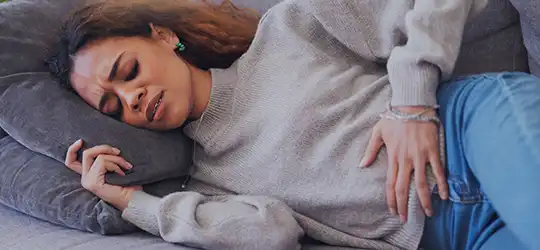
Doctors call it dysmenorrhea. But you likely know it as those spasms in your lower abdomen that can accompany menstruation: period cramps. It’s estimated that up to 95% of women – especially younger women – suffer from them.1 Amanda Schovanec, DO, an OBGYN provider with SSM Health, answers the questions many women have about this unwelcome addition to their monthly cycle.
Why are my period cramps so bad?
According to Dr. Schovanec, “Cramps are caused by your body releasing natural inflammatory substances, called prostaglandins, in response to normal hormonal changes during your cycle. These cause the uterus to contract to shed its lining – what you experience as your period.”
She notes that mild-to-moderate cramping is very common. “However, if your pain is severe, doesn't improve with over-the-counter medications, or interferes with your ability to function, there may be an underlying condition contributing to your symptoms. Severe pain is common, but it is not something you should just have to ‘push through.’”
How can I relieve cramps quickly?
“The most effective first-line treatment for period cramps is over-the-counter NSAIDs –nonsteroidal anti-inflammatory drugs – such as ibuprofen,” she said. “I typically recommend 600-800 mg every six to eight hours as needed, assuming it’s safe for you to take.” She adds that these medications work by reducing the inflammatory substances that cause cramping. “For best results, start taking NSAIDs one or two days before your period begins or at the very first sign of cramping.”
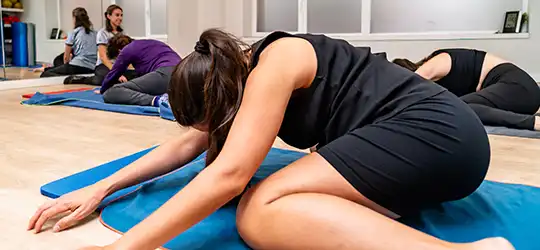
Dr. Schovanec reports that while acetaminophen (Tylenol®), Midol®, and Pamprin can also help, they tend to be less effective for true menstrual cramping. “Other helpful options include heating pads, warm baths, light exercise, and staying well hydrated.
“Some small studies suggest supplements like magnesium or melatonin may help. But more research is needed to confirm their safety and effectiveness. Anti-inflammatory diets are helpful as well,” she noted.
Dr. Schovanec also reminds us that if lifestyle modifications and over-the-counter treatments aren't enough, hormonal birth control is also commonly used to treat and reduce menstrual cramps.
Is it normal to have cramps after my period?
“Cramping after your period ends isn't typically considered normal,” said Dr. Schovanec. “Sometimes gastrointestinal issues like constipation or gas can mimic pelvic cramping.” She suggests that if you are experiencing ongoing or recurrent pain outside of your period and it's not related to GI symptoms, it's worth discussing with your doctor. “Conditions like endometriosis, adenomyosis, or infection can sometimes cause pain at other times in the cycle.”
When should I see a doctor for menstrual cramps?
According to Dr. Schovanec, “You should talk to your doctor if your cramps are severe, worsening over time, or not improving with over-the-counter treatments. It is also important to seek care if your pain is interfering with daily activities like work, school, or caring for your family.”
Do cramps get worse as you age?
“Not necessarily,” she said. “Many people actually notice improvement in cramps over time.” However, if cramps are getting worse with age, it could be a sign of an underlying condition such as fibroids, endometriosis, or adenomyosis. You should be evaluated.
Is it normal to have cramps while on birth control?
Dr. Schovanec indicates that it is possible to have some cramping while on birth control, especially during your period or withdrawal bleed. She adds that hormonal birth control is often used as a treatment for painful periods, and many people notice improvement over time. ”If you're having cramping between periods, make sure you're taking your pills consistently at the same time each day and not missing doses. If the cramping continues, talk to your doctor. An adjustment in your method or dose may help.”
Can severe cramps be a sign of a serious problem?
“Yes,” Dr. Schovanec confirmed, “in some cases.” She adds that “severe, sudden pain – especially if associated with nausea, vomiting, dizziness, or difficulty walking – could indicate an urgent condition and should be evaluated.”
For ongoing (but non-emergent) severe pain, Dr. Schovanec suggests talking to your doctor about possible causes. “Menstrual pain is common, but if it is affecting your quality of life, it is worth getting evaluated. There are effective treatments available.”
If you have additional questions about period cramping, or would like to discuss treatment options, schedule an appointment with an SSM Health Women’s Health provider. Many of our locations offer easy, online scheduling.
1 Primary Dysmenorrhea: Pathophysiology, Diagnosis, and Treatment Updates, Korean J Family Med, March 17, 2022, https://pmc.ncbi.nlm.nih.gov/articles/PMC8943241/