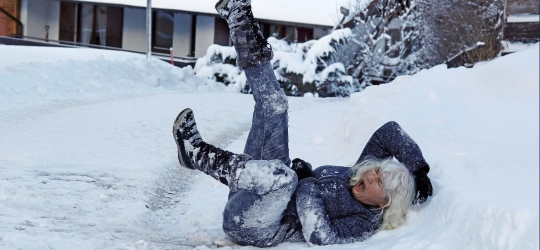
Winter brings its share of beauty, but it also introduces icy walkways and slippery driveways that can lead to falls. Incidents like these can result in serious injuries if not addressed properly. SSM Health is here to answer questions about winter fall hazards, helping you stay informed and prepared.
SSM Health’s Dr. Amit Bhandarkar, an SSM Health Illinois Orthopedic Spine and Pain Medicine provider, shared his insights for navigating slippery situations in the Winter.
“Prevention is always better than cure," said Dr. Bhandarkar. “Wear appropriate footwear with good traction, use handrails when navigating stairs, and salt walkways or driveways to reduce ice hazards. By staying vigilant and prepared, you can reduce the risk of winter-related injuries. The National Weather Service provides information on weather preparedness, warnings and alerts. Stay safe this winter, and remember—when in doubt, always consult a healthcare professional.”
What are the signs I should get checked out after a fall on ice?
Falls on ice can range from minor embarrassments to severe accidents. While not all falls require a trip to the doctor, here are some signs indicating the need for immediate medical attention:
- Persistent pain: Pain that doesn’t improve with rest or over-the-counter pain relief could signal a more serious injury.
- Swelling or bruising: Severe swelling or discoloration around a joint may indicate a sprain, fracture, or internal bleeding.
- Difficulty moving: Difficulty bearing weight, moving a joint, or walking without significant pain might be a sign of a fracture or ligament damage.
- Head injuries: If you hit your head, watch for signs of a concussion such as - dizziness, nausea, confusion, or loss of consciousness.
When in doubt, consult a healthcare professional to rule out serious complications.
The RICE Method
For minor injuries, proper care at home can ease discomfort and promote healing follow the RICE Method:
Rest
Avoid activities that aggravate the injury.
Ice
Apply ice packs to the injured area for 15-20 minutes every few hours during the first 48 hours to reduce swelling.
Compression
Use an elastic bandage to provide support and minimize swelling.
Elevation
Over-the-counter pain medications like ibuprofen or acetaminophen can help alleviate pain and swelling.
However, you should avoid heat initially. Heat can worsen swelling when an injury is fresh. Use heat therapy only after inflammation subsides to relax muscles.
Once pain and swelling have reduced, light exercises like gentle stretching can help restore mobility. Avoid overdoing it. Pushing through severe pain is a sign to rest activity and consult a doctor.
When to seek professional help
“If symptoms persist, worsen, or interfere with daily life, seek medical attention,” said Dr. Bhandarkar. “For suspected fractures, head injuries, or severe pain, immediate evaluation is necessary.” Rehabilitation with a physical therapist may also be beneficial for long-term recovery after significant injuries.