Neurodiverse individuals often navigate a world designed for conformity. Yet their uniqueness is what drives innovation, resilience, and community vitality. At the SSM Health Treffert Center, which works with neurodivergent patients and their families, we believe using a strength-based approach invites us to see creativity as more than an expression. It is also a compass that guides growth and a catalyst that sparks transformation. Let’s explore how creativity protects, amplifies talent, and builds community for twice exceptional populations, families, and educators.
Creativity as a strength-based intervention
Howard Gardner’s theory of multiple intelligence opened the door to understanding intelligence as multifaceted. Darold Treffert, MD showed how extraordinary skills seen in savant populations lead to meaningful contributions. Dr. Joseph Renzulli expanded on this topic with his three-ring conception of giftedness. It underscores the synergy between creativity, task commitment, and above-average ability. Within a therapeutic framework, creativity becomes a strength-based intervention. It highlights what is possible, not what is lacking.
Works by other researchers, further emphasize that talent development is not limited to traditional academic skills. For neurodiverse learners, creativity often bridges the gap between potential and performance. A child who struggles with executive function may thrive when allowed to explore open-ended creative tasks. They may discover talents in art, engineering, or storytelling.
The neuroscience of creativity and resilience
In “Insight Into a Bright Mind,” Dr. Nicole Tetreault shares that creativity and sensitivity are not incidental traits. Instead, they are core features of bright and twice-exceptional minds. When supported, these traits foster resilience, compassion, and self-efficacy. Her work bridges neuroscience with lived experience. It shows how creative practices actually reshape the brain through positive neural plasticity.
Creativity serves as both outlet and regulator. It provides an emotional release for those experiencing intense feelings. And it offers a constructive way to channel overexcitability. Through creative acts, neurodiverse individuals build pathways for self-regulation, growth, and authentic expression.
Community building through creativity
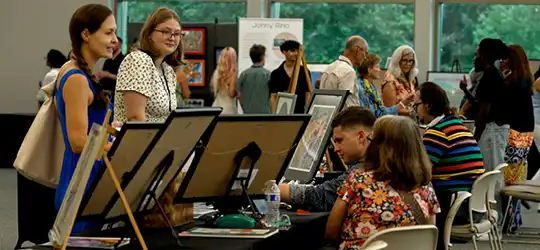
Creativity is inherently connective. It not only nurtures individual identity but also fuels group vitality. Communities that celebrate neurodiverse creativity enjoy cultural richness, entrepreneurial innovation, and greater compassion. Subotnik, Olszewski-Kubilius, and Worrell note that talent development thrives in supportive ecosystems.
Tetreault’s nonprofit organization, Beyond the Cell, reflects this principle. It applies creativity and neuroscience to empower underserved populations. Their programs cultivate group creativity to transform individuals while strengthening communities.
Actionable application
Today, take 10 minutes to create something new with no judgment of outcome. Write a poem, doodle a sketch, compose a tune, or build something simple. Then, share this creation with someone else. This small act reflects the mantra: creativity as compass and catalyst. It centers growth in the present moment while sparking transformation through connection.
Creativity is key
Strength-based interventions thrive when we recognize creativity as essential, not optional. For neurodiverse individuals, creativity is more than expression – it is direction and momentum. By amplifying creative strengths, we foster personal growth and transform community. The compass points inward to self-discovery and outward to collective progress.
Learn more about the SSM Health Treffert Center and its work.