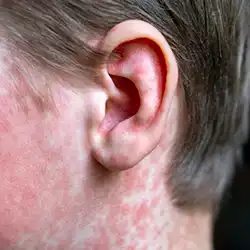
After being extinct in the U.S. for many years, measles has come roaring back due to people skipping vaccinations and traveling from areas of the world where the disease is not under control.
As of May 8, the Centers for Disease Control reported that measles had crossed the 1,000-case threshold in the U.S., with confirmed infections in 31 jurisdictions, including Illinois, Missouri and Oklahoma, three states in which SSM Health provides medical care.
Dr. Shephali Wulff, a practicing infectious disease physician and vice president of quality and safety at SSM Health, says it doesn’t have to be that way.
“Even though measles is not treatable, it is preventable,” she said. “A single dose of the MMR (Measles Mumps Rubella) vaccine provides 93% protection against measles infection, while two doses is 97% effective in preventing measles infection.”
She urges people to get vaccinations for themselves, if they did not get them in childhood, and to have their own children receive the immunizations, which have proven safe and effective for decades. (Some adults may need a booster. Consult your physician about this.)
However, if you think you or your child may have measles or have been exposed to a measles case, Dr. Wulff counsels people to call their physician instead of simply showing up at the office, urgent care, or emergency room.
“If you have been exposed or have symptoms, call first – don’t just show up,” Dr. Wulff said. “Measles is highly infectious, and all of these places need to know you would like to come in so they can make arrangements to protect their staff and other patients waiting to be seen.”
In fact, Wulff said, if people haven’t been immunized, a person with measles can infect 9 out of 10 people who are exposed to them.
“Measles is an extremely contagious viral infection,” Dr. Wulff said. “It’s spread by small respiratory droplets from infected people who cough or sneeze. These droplets can live in the air for two hours and can also live on surfaces.”
Symptoms of measles
Dr. Wulff said measles typically involves the following symptoms:
- Fevers as high as 104 or 105 degrees Fahrenheit
- Runny nose
- Red watery eyes
- A full body red rash
Patients are considered infectious four days prior to the onset of the rash and for four days after the rash has completely resolved – it’s that insidious.
While most people will recover from measles, those who are unvaccinated are more likely to develop serious complications: 10-20% will require hospitalization, 1/20 will develop pneumonia, 1/1000 will develop brain swelling (encephalitis). Of the U.S. measles cases confirmed in 2025, 10 percent of patients have required hospitalization, and three patients have died from measles, according to the CDC.1