Palliative Care
Specialized care for patients with serious illnesses.
Palliative care is specialized, supportive medical care for individuals with serious illnesses. The palliative care team works with you and your medical team to manage the symptoms of your illness and to make a plan for the future that aligns with both your personal goals and values and your health care needs.
What is palliative care?
Palliative care is a type of care that focuses on providing patients with relief from the symptoms and stresses of a serious illness. Palliative care focuses on how the disease and associated symptoms impact a patient’s life, their family and their relationships.
The goal of palliative care is to improve quality of life for both the patient and their family. Palliative care can be, and often is, provided at the same time as curative treatment.
Palliative care is useful for patients at any age and any stage of any serious medical condition. It is especially helpful for patients with progressive and serious illnesses such as cancer, heart failure, lung disease, neurological disease, liver disease, kidney disease and dementia.
How can palliative care help me?
Whether you have just been diagnosed with an illness, are in active treatment or have completed therapy, you can likely benefit from palliative care. We can help you sort through the physical, emotional, existential and spiritual issues that arise during periods of serious illness so that you can focus on living your best life.
How does palliative care work?
Palliative care is provided by a team of doctors, nurses, social workers, chaplains and other health care specialists. The team has special expertise in communication and symptom management.
We work closely with you, your family and your doctors to develop a plan that respects your values and treatment preferences. Our recommendations are based on your unique situation and goals. Together, we create a plan for your care that incorporates what matters most to you.
What can symptoms can palliative care help me with?
- Pain
- Shortness of breath
- Fatigue
- Constipation
- Nausea
- Loss of appetite
- Difficulty sleeping
- Depression
Palliative care can be provided at any stage of a serious or chronic illness, including at the same time as curative and life-prolonging treatments.
What kind of patient and family support do you offer?
With palliative care, you and your family also have an advocate for navigating the health-care system. The benefit is improved pain and symptom management and a better understanding of your treatment plan.
A board-certified medical director guides your in-home palliative care team, which may include nurses and social workers. Our palliative care team works with your physician, who remains responsible for coordinating and managing your overall medical care.
Our palliative care nurse visits during regular work hours to monitor and supervise your condition. We have a nurse available by phone to assist you or arrange a home visit, if necessary. Further, a social worker will support you and your caregiver by listening to and discussing difficult feelings and by assisting with practical matters such as informing you of community resources.
How palliative care can help you:
- Enhance well-being and quality of life
- Reduce symptoms caused by either the disease or associated treatment
- Reduce suffering and pain – whether physical, emotional or spiritual
- Provide medical, emotional and spiritual support all along your illness journey
- Facilitate communication and decision-making that reflects the values of you and your family
- Empower you to feel more in control of your care
Your palliative care team will provide you with:
- Counseling and coordination of care with other health care providers, including: your primary doctor, hospitalists and other various specialists
- Assistance with completing advance directive documents that reflect your health care wishes
- Facilitation of difficult conversations amongst family members and help in coping with the stress of a loved one’s serious illness
- Social work services to help connect you to resources for ongoing support in your community
- Spiritual care and support for people of all faiths and beliefs
Did you know palliative care and home health are different services? If you need help with bathing, dressing changes, medication administration, and more please view our home health offerings. Patients can receive both palliative care and home health visits.
Where can I receive palliative care?
Palliative care can be provided in hospitals, clinics, nursing homes, and assisted living facilities. Care may be provided in the home if patients meet certain eligibility requirements.
Hospital-based palliative care locations:
SSM Health provides hospital-based palliative care at a number of our facilities. Please contact the hospital nearest you for more information.
- SSM Health Good Samaritan Hospital - Mt. Vernon - 618-899-2470
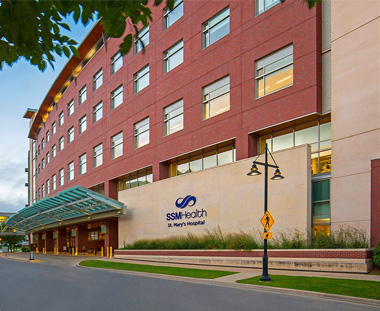
- SSM Health St. Mary's Hospital - Centralia - 618-899-2470
- SSM Health DePaul Hospital - St. Louis - 314-344-6170
- SSM Health St. Joseph Hospital - Lake Saint Louis - 636-625-5445
- SSM Health St. Joseph Hospital - St. Charles - 636-947-5082
- SSM Health Saint Louis University Hospital - 314-257-8264
- SSM Health St. Mary's Hospital - St. Louis - 314-768-8652
- SSM Health St. Clare Hospital - Fenton - 636-496-2533
Hospital-based palliative care:
SSM Health provides hospital-based palliative care at a number of our facilities. Please contact the hospital nearest you for more information.
- SSM Health St. Anthony Hospital - Oklahoma City – 405-231-8851
- SSM Health St. Anthony Hospital - Shawnee – 405-878-8188
Advanced Illness Management program in St. Louis, Missouri
The advanced illness management (AIM) home-based palliative care program focuses on helping patients who have challenges leaving the home due to serious chronic illness.
Our AIM palliative care team includes physicians and nurse practitioners who are ready to step in to assist patients and their caregivers in navigating this stressful part of life.
The goal of AIM program is to ease some of the burden of serious illness by giving outstanding care to patients and families through control of symptoms in the home where “home” is defined as where a person currently lives.
Our service prepares patients and caregivers for transitions related to severe chronic illness whether the outcome is a return to more fully independent living or a transition to end-of-life care.
Care is provided by a co-management team that works together with a patient’s primary care provider (PCP) as an added layer of support for people diagnosed with serious chronic illness(es) and their caregiver(s). The PCP remains at the center of medical management and is kept informed of a patient’s ongoing condition.