
Cancer Care
Providing world-class cancer care close to home.
Every cancer journey, like every patient, is unique. At SSM Health we provide cutting-edge cancer treatment, individualized care plans, and a board-certified care team to guide you at every step of your cancer journey.
To serve you better, please set your location for information on services available in your area.

A cancer journey is a deeply personal one. It's important to have a care team you trust. Read patient reviews on our cancer specialists.

The oncology and cancer specialists at SSM Health diagnose and treat a wide variety of cancer types.
Why choose SSM Health for cancer care?
When you choose SSM Health for cancer care, you are choosing expertise, innovation and compassion. From offering advanced treatments to supporting you through your recovery and life after cancer, our team is here to guide you on your cancer journey. Learn more about cancer treatments and procedures.
We're at the forefront of advancing national quality standards.
We believe it is important to continually measure the quality of care provided to our patients and compare it to national quality standards, ensuring we are offering the highest and most appropriate level of care.
SSM Health Cancer Care programs are accredited by the American College of Surgeons’ on Cancer.
- This organization recognizes SSM Health for providing comprehensive programs designed to treat the entire person, including physical, emotional and spiritual health, as well as the needs of the patient’s loved ones.
SSM Health Cancer Care participates in ASCO CancerLinQ®, a health information platform from the American Society of Clinical Oncology (ASCO) that collects and analyzes medical and treatment data from oncology practices. Why ASCO CancerLinQ® is important to our patients:
- Quality: Delivers real-time quality metrics to your physician to enable better-informed decisions about your care.
- Insights: Provides your care team with a powerful suite of analytic tools to compare your treatment options to patients like you.
- Research: Enables researchers to use de-identified data collected from millions of patients like you to uncover patterns that may lead to new advances in cancer diagnosis and treatment.
Please note, information about patients and patient care is securely provided to the ASCO CancerLinQ® platform.
Our Clinical Practice Committee continues to refine the SSM Health Cancer Care experience.
- This team of multi-disciplinary physicians examines evidence-based treatment options and protocols as documented in National Comprehensive Cancer Network (NCNN) guidelines to ensure our patients receive comprehensive, state-of-the-art cancer care.
The SSM Health Tumor Board is a meeting of the physicians and staff potentially involved in a patient’s care.
- During this interactive gathering, our physicians conduct a detailed review of the patient’s case together to determine the best options for treatment.
What conditions does SSM Health Cancer Care treat?
- Anal Cancer
- Bile Duct Cancer
- Bladder Cancer
- Bone and Soft Tissue Cancer
- Brain and Spinal Cord Tumors in Adults
- Breast Cancer
- Breast Cancer in Men
- Cervical Cancer
- Colorectal Cancer
- Endometrial Cancer
- Esophagus Cancer
- Gallbladder Cancer
- Gestational Trophoblastic Disease
- Hodgkin Lymphoma
- Kidney Cancer
- Laryngeal and Hypopharyngeal Cancer
- Leukemia
- Liver Cancer
- Lung Cancer
- Lymphoma
- Melanoma Skin Cancer
- Multiple Myeloma
- Nasal Cavity & Paranasal Sinuses Cancer
- Nasopharyngeal Cancer
- Non-Hodgkin Lymphoma
- Oral Cavity and Oropharyngeal Cancer
- Ovarian Cancer
- Pancreatic Cancer
- Penile Cancer
- Prostate Cancer
- Salivary Gland Cancer
- Sickle-Cell Disease
- Skin Cancer
- Soft Tissue Sarcoma
- Stomach Cancer
- Testicular Cancer
- Thyroid Cancer
- Urological Cancers
- Uterine Sarcoma
- Vaginal Cancer
We're with you for every step of your cancer journey.
Diagnosis and treatment are not nearly enough when living with cancer. That’s why SSM Health doesn’t stop there. While you are receiving care at SSM Health you will have access to:
- Dietitians to answer your nutrition questions
- Support groups and behavioral health professionals
- Personalized price estimates, payment plans, and financial assistance
- Palliative care services
Why are preventative cancer screenings important?
Early detection plays a huge role in cancer survival. That’s why SSM Health believes in the value of routine, preventative screenings even if there are no symptoms or history of the disease.
Family medical history, lifestyle choices, as well as other factors can put you at a greater risk for cancer. Consistent screening helps your healthcare provider find cancer early, when treatment can provide a better outcome.
Women of average breast cancer risk should start screening mammography at age 40. In addition to annual mammogram screenings, it is recommended you:
- Get a clinical breast exam (CBE) as part of your annual well woman exam.
- Be familiar with how your breasts normally look and feel. Report changes to your provider.
Women that are at high risk for developing breast cancer should start screening mammography at age 30, and should also undergo supplemental breast MRI screening. You are considered to be at high-risk for breast cancer if you:
- Have a lifetime risk of breast cancer 20-25% or greater.
- Are BRCA1 or BRCA2 gene mutation positive.
- Have a parent, brother or sister with a BRCA1 or BRCA2 gene mutation.
- Had radiation therapy to the chest between the ages of 10 and 30 years.
- Have Li-Fraumeni Syndrome, Cowden Syndrome, or Bannayan-Riley-Ruvalcaba Syndrome, or have a first degree relative with one of these syndromes.
Nearly all cervical cancer is caused by a human papilloma virus, or HPV. The virus is sexually transmitted and so common that most sexually active adults have or have had an HPV infection at some point in their lives.
Everyone with a cervix should get screened. Guidelines for cervical cancer screenings vary by age:
- For women 21-29 years or age it is recommend to get a Pap test every three years.
- For women 30-65 years or age it is recommended you get a combined Pap/HPV co-testing (or HPV alone) every three to five years.
- For women 65 or older it is usually recommend women to stop getting tested, though individual factors could change the recommended schedule. Talk to your doctor.
Adults of average risk for developing colorectal cancer risk should start screening at age 45. Based on your family and health history, our doctor will recommend one or more types of screening tests:
- Highly sensitive stool-based test, also known as a FIT test, every year.
- Colonoscopy every 10 years.
- CT colonography (virtual colonoscopy) every five years.
- Flexible sigmoidoscopy every five years.
- Double-contrast barium enema every five years.
Adults who are high risk should start screening earlier than age 45. You could be at high risk for developing colorectal cancer if you have:
- Personal history of colorectal cancer or adenomatous polyps.
- Personal history of chronic inflammatory bowel disease (Crohn’s disease or ulcerative colitis).
- Strong family history of colorectal cancer or polyps.
- Family history of hereditary colorectal cancer syndromes.
- Personal history of radiation to the abdomen or pelvic area prior.
There is not a standard, annual screening test for endometrial cancer. Instead providers look for symptoms like abnormal vaginal bleeding (especially in menopausal women) and use imaging and biopsies to test for cancer when symptoms arise.
If you are at a high risk for hereditary non-polyposis colon cancer (HNPCC), annual screenings should be done for endometrial cancer with an endometrial biopsy beginning at age 35.
Caught early, lung cancer is highly treatable. But since there are no symptoms, in many cases it’s not discovered until the cancer has become dangerous. Until recently, there wasn’t a screening tool for people who: currently smoke, used to smoke, were exposed to secondhand smoke, or were exposed to environmental factors such as heavy metals or radon in the home.
Lung cancer screenings involve computed tomography imaging (CT scan) which provides a detailed image of your lungs. The scan only takes a few minutes and is painless.
People who are between 50 - 80 years old should get screened for lung cancer if they:
- Have/had a 20-pack-year tobacco smoking history
- Currently smoke or have quit in the last 15 years
Speak with your primary care provider if you are concerned about your risk of developing lung cancer.
- All men who are of average risk for developing cancer should get prostate cancer screenings starting around the age of 50.
- Men who are at high risk of developing cancer (black men and men with a family history of prostate cancer) should begin getting screenings at the age of 45.
- Men who are at very high risk of developing cancer (multiple relatives have had prostate cancer) should potentially start screenings at the age of 40.
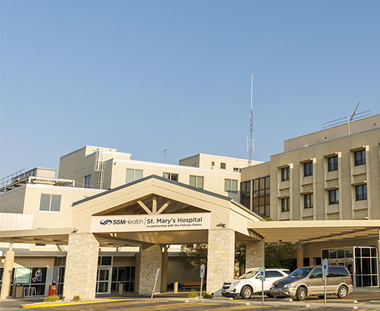







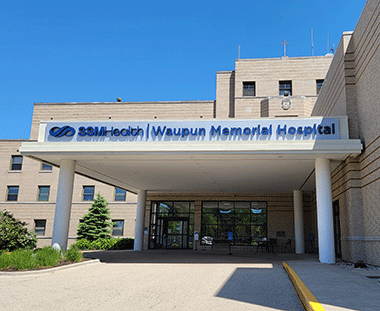
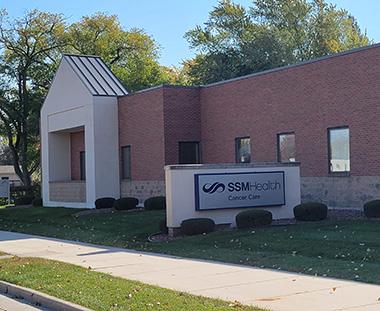
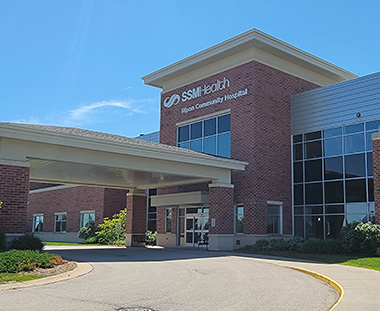
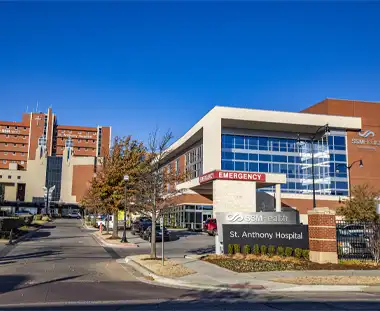
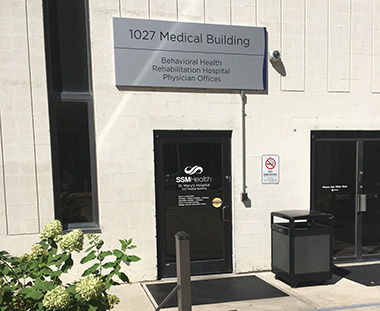
Outpatient Infusion Services at SSM Health St. Mary's Hospital - St. Louis
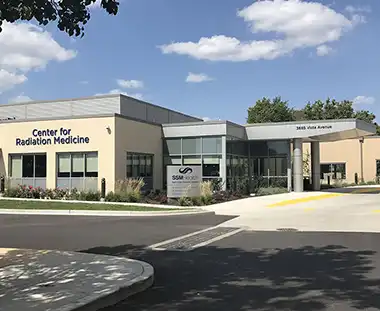
SSM Health Saint Louis University Hospital Center for Radiation Medicine

SLUCare Physician Group - Cancer Care - Des Peres
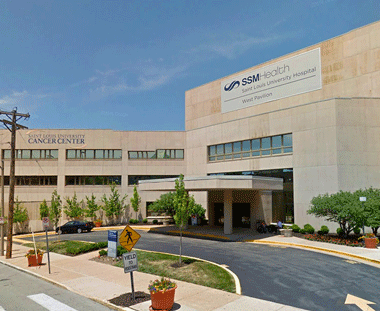
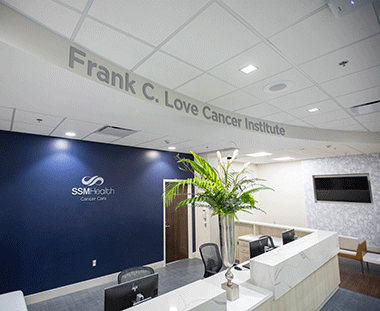
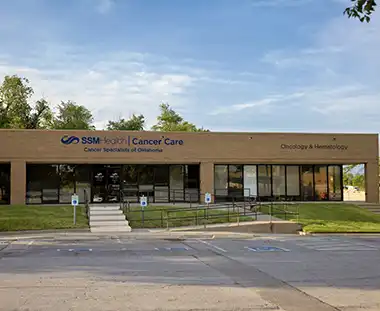


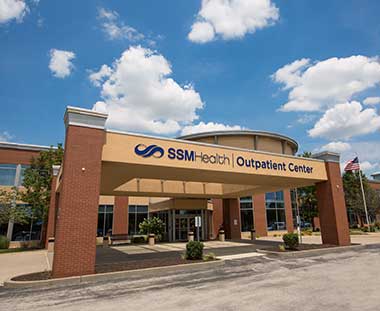




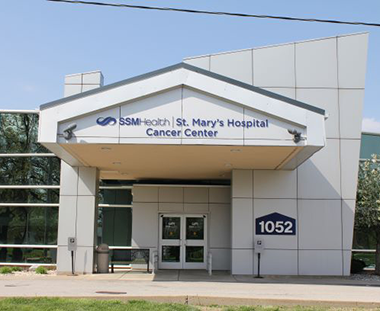
Outpatient Infusion Services at SSM Health

The Costas Center at SSM Health Cardinal Glennon Children's Hospital