Prostate Cancer
Nearly one in seven men will be diagnosed with prostate cancer during their life. The survival rate for prostate cancer is extremely high, especially when diagnosed and treated early.

A cancer journey is a deeply personal one. It's important to have a care team you trust. Read patient reviews on our cancer specialists.

SSM Health knows each patient's cancer is different and we offer individualized treatment plans using cutting-edge technology.
What is prostate cancer?
Prostate cancer is caused when cells in the prostate change and start to grow in an abnormal way. Those cells may form noncancerous growth, a tumor, cancer, or cancer that has metastasized (spread to other parts of your body).
Who is at risk for prostate cancer?
- Men 50 and older are at higher risk for developing prostate cancer.
- If your father or brother had prostate cancer, your risk increases.
- African American men are more likely to develop prostate cancer.
How is prostate cancer diagnosed?
Prostate cancer often has no early warning signs. Early detection from preventative screenings is key to early diagnosis and treatment.
Diagnostic tests and procedures, like PSA tests and digital rectal exams, are used to look for warning signs of prostate cancer but can’t actually confirm a diagnosis. If your results are abnormal, your doctor will most likely recommend a prostate biopsy to confirm a prostate cancer diagnosis.
Did you know SSM Health has cancer center?
No two people are exactly alike, and no two cancers are exactly alike. The SLUCare Physician Group specialists at the Saint Louis University Cancer Center work as a team to identify your cancer and design a personalized, coordinated treatment plan. Learn more about the Saint Louis University Cancer Center.
How is prostate cancer treated?
You and your physician will work together to create the best individualized care plan. Depending on your type of prostate cancer and how aggressively it is growing your care team could recommend one or more treatments, including:
Please note not all treatments and procedures are available at every location.
Active surveillance is a management strategy for early-stage, slow-growing prostate cancer. Your care team will monitor the cancer closely with regular tests like: PSAs, digital rectal exams, biopsies, and MRIs.
Brachytherapy - Radioactive Seed Implant is a type of radiation therapy where radioactive seeds are placed into the prostate. This is a very effective form of treatment as it allows for a very high dose of radiation to be delivered to the cancer while sparing adjacent tissues.
Cryotherapy involves the use of very cold temperatures to freeze prostate cancer cells. This may be a treatment option for patients with early-stage cancer who are good candidates for radiation or surgical treatments, or whose cancer has returned following radiation.
Hormone therapy blocks production of specific hormones with medication. By blocking hormones, the growth of prostate cancer is sometimes inhibited.
- In a robotic prostatectomy, the surgeon uses a robotic arm to remove the prostate in a minimally invasive procedure. The physician-guided robotic arm allows for greater precision than traditional surgery.
- A radical prostatectomy involves complete removal of the prostate gland and surrounding tissues. This is typically done when the prostate cancer is confined to the prostate gland and hasn't spread to other parts of the body.
Cyberknife is a non-invasive robotic radiotherapy instrument that very precisely delivers SBRT (Stereotactic Body Radiation Therapy) to prostate cancer patients in only five treatments.
Varian TrueBeam is a non-invasive radiotherapy instrument that very precisely delivers either stereotactic, hypofractionated, or standard fractionated therapy via VMAT (Volumetric Modulated Arc Therapy) to prostate cancers.
Varian EDGE is a non-invasive radiotherapy instrument that uses highly focused radiation beams with real-time tumor tracking (SBRT/SRS) to precisely destroy tumors in the prostate.
SpaceOar Placement
This is a synthetic gel that temporarily positions the rectum away from the prostate. It helps reduce the dose delivered to the rectum during prostate cancer radiation therapy. After 12-15 weeks, the gel is naturally reabsorbed by the body.
Fiducial Placement
Small coils, called fiducials, are placed within the prostate which allows the medical team to visualize the location of the prostate and track the positioning of the gland while radiation is being administered.
Transurethral Ultrasound Ablation (TULSA) is a minimally invasive, MRI-based treatment for prostate cancer. This procedure relies on heat to destroy diseased tissue. TULSA targets specific areas of concern while protecting the healthy tissue around it.

SLUCare Physician Group - Cancer Care - Des Peres


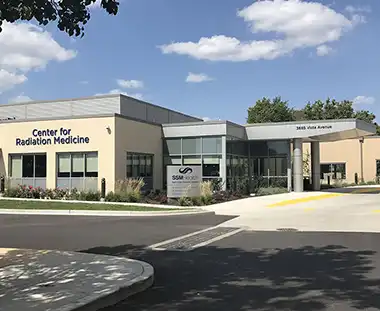
SSM Health Saint Louis University Hospital Center for Radiation Medicine