
Music Therapy
As defined by the American Music Therapy Association (AMTA), music therapy is the clinical and evidence-based use of music interventions to accomplish individualized goals within a therapeutic relationship by a credentialed professional who has completed an approved music therapy program.
In other words, board-certified music therapists use music as a tool to help patients meet individualized non-musical goals.
Frequently Asked Questions
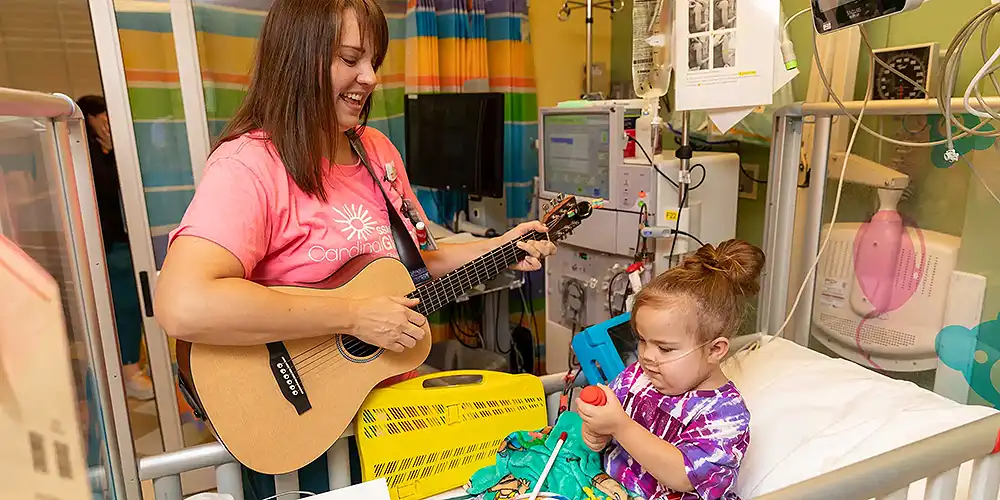
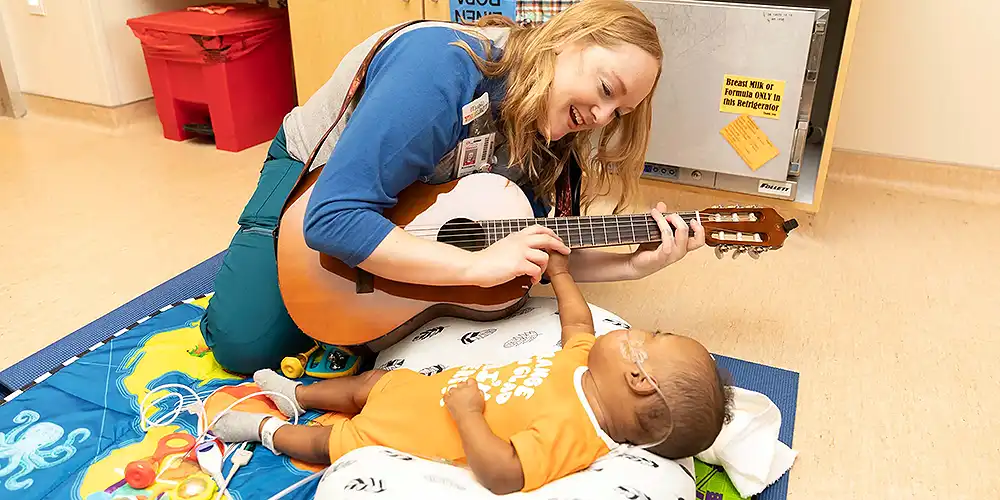
Music therapists use a variety of interventions tailored to each patient's unique needs. Some of the most frequently used interventions include live music, playing instruments together, singalongs, songwriting and recording, music assisted relaxation, guided imagery, lyric analysis, and the creation of legacy projects.
Our board-certified music therapists utilize a variety of instruments and recording equipment within sessions thanks to the generosity of the SSM Health Cardinal Glennon Children's Foundation. Patient visits take place at the bedside and family and caregivers are welcome to participate. Co-treatment with other hospital disciplines may sometimes take place when deemed appropriate.
Music therapy is currently offered in all inpatient units. An SSM Health Cardinal Glennon Children's Hospital patient might be referred to music therapy by anyone on our care team. Some common reasons patients might be referred to music therapy include coping support, isolation, pain/symptom management, assistance with anxiety or depression, or procedural support. After a patient is referred, the music therapist will make an initial visit to assess needs and establish goals for the child. Music interventions can address normalization of the hospital experience, increasing coping abilities, providing opportunities for creative self-expression, and emotional support for both the child and family unit.
Families may request a music therapy consultation through any member of their child's care team.
Our music therapists can offer patients assistance with:
- Emotional expression/coping
- New diagnosis support
- Normalization of hospitalization
- Stress relief
- Anxiety/depression
- Procedural support
- Pain/symptom management
- Physical/motor concerns
- Cognitive needs
- Developmental delays or disabilities
- Speech/language delays
- Legacy building/end of life support
Therapeutic interventions may include:
- Live music to address symptom management/anxiety
- Instrument playing
- Sing-along/song choice
- Improvisation
- Songwriting/song recording project
- Music assisted relaxation
- Legacy project
- Guided imagery
- Therapeutic music education
Common goals for music therapy in the NICU include:
- Increase tolerance to multi-modal stimulation for premature infants
- Reinforce non-nutritive sucking using the Pacifier Activated Lullaby (PAL®)
- Provide calming/coping support for pain, irritability, or restlessness
- Promote developmental milestones
- Provide family support through songwriting and bonding opportunities
- Provide legacy projects and keepsakes, such as heartbeat recordings
- Promote noise regulation, normalization, and appropriate developmental support
Parents are always welcome and encouraged to engage with their child in music therapy treatment. While some parents feel comfortable engaging actively and may even benefit from participation themselves, others choose to observe or step out for self-care during their child's visit. All levels of parent participation are welcome.
Families may request a music therapy visit through any member of their child's care team.
Donations Accepted by the Music Therapy Program
Your donations are always welcome!
Patients and families are very appreciative of all gifts and are touched by your generosity to help make their hospital stay more comfortable.
Learn more about Child Life and donation opportunities to the music therapy program and other areas of the hospital.
Music Therapy Internship
The music therapy program at SSM Health Cardinal Glennon Children's Hospital will not be hosting an internship in 2028. Applicants interested in the January 2029 internship should apply by June 1, 2028.
SSM Health Cardinal Glennon Children’s Hospital offers a 1040 hour (approximately six months) clinical music therapy internship. The internship is designed to provide students with a comprehensive learning experience to acquire skills necessary to successfully enter the music therapy field. Our team of board-certified music therapists will supervise the student while he/she participates in clinical experiences with children and families.