“I was shocked and upset. I knew since early in my first trimester that there was potential for twin-to-twin transfusion syndrome (TTTS) to develop because of the type of twins I was carrying. That's why I was going to routine ultrasounds – to see if TTTS would happen. Even though I knew about the possibility prior to my TTTS developing, I took my doctor’s advice and tried not to think about it. They told me we had a 20-percent chance of TTTS, and at the time that seemed so slim,” says Theresa.
 Because Theresa and her husband David knew that TTTS was a possibility with her pregnancy, they researched their options so they would be ready if the diagnosis came. TTTS is a prenatal condition in which twins share unequal amounts of the placenta’s blood supply, resulting in the two fetuses growing at different rates. Seventy percent of identical twins share a placenta, and 10-20 percent of these pregnancies are affected by TTTS.
Most commonly, the twins are in different sacs of fluid, the amniotic sacs. This type of twin pregnancy is called di-amniotic (two sacs) and monochorionic (one placenta). In di-amniotic, monochorionic twins (di-mo twins), there are shared blood vessels which run from one twin to the other on the surface of the placenta. Most often the net flow of blood between the twins is fairly even, but when there is an imbalance of blood flow across these blood vessels, such that one twin is getting more blood supply than the other, then TTTS can occur. The fetus with more blood flow is called the recipient twin, and the fetus with less is called the donor twin.
When she was 21 weeks pregnant, Theresa was diagnosed with severe TTTS, and surgery was needed immediately. Already having their hands full with a five-year-old daughter at home, the couple embarked on a journey to save their twin boys.
Theresa and David were not aware there was a facility in St. Louis that could help them. She says that the way they found out about the St. Louis Fetal Care Institute is the main reason they want to raise awareness of it. “When I was going for routine ultrasounds, my husband and I were always told about hospitals in other states that offered the TTTS surgery. We were never told that St. Louis had a doctor that could do the procedure. We had already prepared our families and employers that we might need to travel without much – if any – notice if TTTS developed. But the day they told us I had developed TTTS and needed fetal laser surgery, I was in too much pain to travel. My doctors and the hospital’s fetal care specialists referred me to the St. Louis Fetal Care Institute,” Theresa reports.
Still, all Theresa could focus on was getting to a center that was more than six hours away. Then she and David met Fetal Care Institute Program Coordinator Katie Francis, who showed the utmost concern for Theresa and her twins. The couple was still not sure if staying in St. Louis was the right choice. However, after drilling the team with questions, they decided the St. Louis Fetal Care Institute was the best place for their care.
Theresa comments, “We remember our doctor saying, 'If you decided to have the procedure here, I will do my best to get my staff here tonight." At 9 p.m. that evening the St. Louis Fetal Care Institute team performed the TTTS laser surgery. "He didn’t finish the surgery until at least 2 a.m. and he was in my room later that morning checking on me. After the surgery, I knew we made the right decision," recalls Theresa.
During Theresa's fetal surgery, the team made a small incision in her stomach and used a laser to correct blood flow in some of the placenta's veins and arteries. Following the surgery, she had complications with contractions, which put her on bed rest. Then at approximately 28 weeks, there was a fluid shift with the boys that landed Theresa back into the hospital for the rest of her pregnancy.
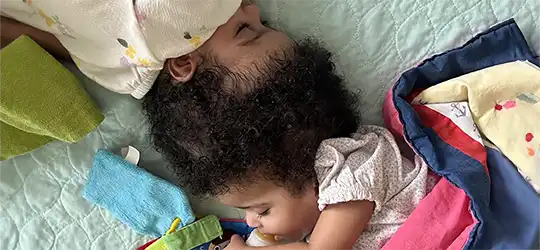
Theresa and David's boys – Aidan and Blake – made it to full-term and were born at 37 weeks via cesarean section. The twins are doing great, and never had to stay in the neonatal intensive care unit (NICU). Their follow-up appointments aren’t revealing any problems. There is very little size difference between the boys. In fact, on many days, the family has a hard time telling them apart.
Theresa says, “We have made many friends through the St. Louis Fetal Care Institute. We found parents that have been through similar situations. 'The girls' – as I referred to the women on the team – were irreplaceable. They were instrumental in helping my family every step of the way. They saved our babies. My boys are here today because of their compassion, knowledge, and skill. The staff at Fetal Care Institute were never just our nurses, doctors and staff. They were our friends who truly cared about our family’s outcome.”
Theresa says, “They were the ones I trusted. If they said something, I knew it was true. When I called them, they always returned my calls promptly. If the team needed to call our doctor about my condition, he always got back with them right away. It was like having my own team of specialists by my side 24/7. That alone was comforting. When I developed complications, they took every precaution to keep me safe. My husband and I had no doubt that if more complications were to arise, the Fetal Care Institute team would do what they could to correct them. They proved that they could handle my condition even when new complications arose.”
Theresa and David said that throughout their journey, their daughter was a trooper. She handled the situation like it was any other time in her life. The couple could not shield her from most of the problems. The little girl knew that her brothers needed a lot of care, and she knew that her mom went to a lot of doctors’ appointments.
“The hardest challenge was when I was in the hospital for the extended period of time. She was five years old the day I went into the hospital to stay, and it was also her first day of kindergarten. I was amazed at how grown up she acted. She made it easy not to worry about her and concentrate on keeping her brothers safe. Every time I talked to her, she was happy. When my husband wasn’t visiting me, working, or taking on all of the housework, bills and so much more, he was taking care of our daughter. David made sure she was okay, doing well in school and having as much routine as he could give her. I owe a lot to my family and friends who babysat, visited me, and helped keep my life running smoothly while I was in the hospital. I would not have made it through without all of their support,” Theresa says.
Theresa and David learned a lot from this experience. They found out that sometimes you can’t control a situation no matter how hard you try. There was no explanation on why their boys developed TTTS and others don’t. Theresa had no control over whether it developed. She would advise expectant families facing similar situations that there is always hope, no matter what the statistics say. “I would tell them to stay positive even when it is easier to be negative. I would tell them they are never alone -- there is support out there. Lastly, I would tell them about the wonderful team I met while going through this,” she comments.
Before her pregnancy, Theresa didn't know much about TTTS or anyone who had gone through it. Since the boys have been born, she hears about more and more people in the same situation, and is working to build awareness.
Because they were so grateful for the Fetal Care Institute's care, Theresa and David hold a baseball-game fundraiser to benefit the Institute every year. “My family’s love for the St. Louis Cardinals just made the decision easier. We wanted to raise awareness for TTTS because we were not even aware that St. Louis had a facility that treated TTTS. If I wasn’t in so much pain the evening I was diagnosed, I probably would have never found out about the Fetal Care Institute,” Theresa says.
Because Theresa and her husband David knew that TTTS was a possibility with her pregnancy, they researched their options so they would be ready if the diagnosis came. TTTS is a prenatal condition in which twins share unequal amounts of the placenta’s blood supply, resulting in the two fetuses growing at different rates. Seventy percent of identical twins share a placenta, and 10-20 percent of these pregnancies are affected by TTTS.Most commonly, the twins are in different sacs of fluid, the amniotic sacs. This type of twin pregnancy is called di-amniotic (two sacs) and monochorionic (one placenta). In di-amniotic, monochorionic twins (di-mo twins), there are shared blood vessels which run from one twin to the other on the surface of the placenta. Most often the net flow of blood between the twins is fairly even, but when there is an imbalance of blood flow across these blood vessels, such that one twin is getting more blood supply than the other, then TTTS can occur. The fetus with more blood flow is called the recipient twin, and the fetus with less is called the donor twin.
When she was 21 weeks pregnant, Theresa was diagnosed with severe TTTS, and surgery was needed immediately. Already having their hands full with a five-year-old daughter at home, the couple embarked on a journey to save their twin boys.
Theresa and David were not aware there was a facility in St. Louis that could help them. She says that the way they found out about the St. Louis Fetal Care Institute is the main reason they want to raise awareness of it. “When I was going for routine ultrasounds, my husband and I were always told about hospitals in other states that offered the TTTS surgery. We were never told that St. Louis had a doctor that could do the procedure. We had already prepared our families and employers that we might need to travel without much – if any – notice if TTTS developed. But the day they told us I had developed TTTS and needed fetal laser surgery, I was in too much pain to travel. My doctors and the hospital’s fetal care specialists referred me to the St. Louis Fetal Care Institute,” Theresa reports.
Still, all Theresa could focus on was getting to a center that was more than six hours away. Then she and David met Fetal Care Institute Program Coordinator Katie Francis, who showed the utmost concern for Theresa and her twins. The couple was still not sure if staying in St. Louis was the right choice. However, after drilling the team with questions, they decided the St. Louis Fetal Care Institute was the best place for their care.
Theresa comments, “We remember our doctor saying, 'If you decided to have the procedure here, I will do my best to get my staff here tonight." At 9 p.m. that evening the St. Louis Fetal Care Institute team performed the TTTS laser surgery. "He didn’t finish the surgery until at least 2 a.m. and he was in my room later that morning checking on me. After the surgery, I knew we made the right decision," recalls Theresa.
During Theresa's fetal surgery, the team made a small incision in her stomach and used a laser to correct blood flow in some of the placenta's veins and arteries. Following the surgery, she had complications with contractions, which put her on bed rest. Then at approximately 28 weeks, there was a fluid shift with the boys that landed Theresa back into the hospital for the rest of her pregnancy.
Theresa and David's boys – Aidan and Blake – made it to full-term and were born at 37 weeks via cesarean section. The twins are doing great, and never had to stay in the neonatal intensive care unit (NICU). Their follow-up appointments aren’t revealing any problems. There is very little size difference between the boys. In fact, on many days, the family has a hard time telling them apart.
Theresa says, “We have made many friends through the St. Louis Fetal Care Institute. We found parents that have been through similar situations. 'The girls' – as I referred to the women on the team – were irreplaceable. They were instrumental in helping my family every step of the way. They saved our babies. My boys are here today because of their compassion, knowledge, and skill. The staff at Fetal Care Institute were never just our nurses, doctors and staff. They were our friends who truly cared about our family’s outcome.”
Theresa says, “They were the ones I trusted. If they said something, I knew it was true. When I called them, they always returned my calls promptly. If the team needed to call our doctor about my condition, he always got back with them right away. It was like having my own team of specialists by my side 24/7. That alone was comforting. When I developed complications, they took every precaution to keep me safe. My husband and I had no doubt that if more complications were to arise, the Fetal Care Institute team would do what they could to correct them. They proved that they could handle my condition even when new complications arose.”
Theresa and David said that throughout their journey, their daughter was a trooper. She handled the situation like it was any other time in her life. The couple could not shield her from most of the problems. The little girl knew that her brothers needed a lot of care, and she knew that her mom went to a lot of doctors’ appointments.
“The hardest challenge was when I was in the hospital for the extended period of time. She was five years old the day I went into the hospital to stay, and it was also her first day of kindergarten. I was amazed at how grown up she acted. She made it easy not to worry about her and concentrate on keeping her brothers safe. Every time I talked to her, she was happy. When my husband wasn’t visiting me, working, or taking on all of the housework, bills and so much more, he was taking care of our daughter. David made sure she was okay, doing well in school and having as much routine as he could give her. I owe a lot to my family and friends who babysat, visited me, and helped keep my life running smoothly while I was in the hospital. I would not have made it through without all of their support,” Theresa says.
Theresa and David learned a lot from this experience. They found out that sometimes you can’t control a situation no matter how hard you try. There was no explanation on why their boys developed TTTS and others don’t. Theresa had no control over whether it developed. She would advise expectant families facing similar situations that there is always hope, no matter what the statistics say. “I would tell them to stay positive even when it is easier to be negative. I would tell them they are never alone -- there is support out there. Lastly, I would tell them about the wonderful team I met while going through this,” she comments.
Before her pregnancy, Theresa didn't know much about TTTS or anyone who had gone through it. Since the boys have been born, she hears about more and more people in the same situation, and is working to build awareness.
Because they were so grateful for the Fetal Care Institute's care, Theresa and David hold a baseball-game fundraiser to benefit the Institute every year. “My family’s love for the St. Louis Cardinals just made the decision easier. We wanted to raise awareness for TTTS because we were not even aware that St. Louis had a facility that treated TTTS. If I wasn’t in so much pain the evening I was diagnosed, I probably would have never found out about the Fetal Care Institute,” Theresa says.