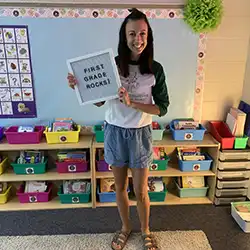
Shannon Jones, a first-grade teacher at Westside Elementary School in Sun Prairie, Wisconsin, contracted COVID-19 in 2022. Despite recovering from the initial infection, she continues to experience the hindering effects of Long COVID three years later including chronic fatigue and brain fog.
Initial diagnosis and symptoms
Jones' symptoms included shortness of breath, chest pain, fatigue and coughing. While a friend who contracted COVID-19 at a similar time began to recover, Jones noticed her own progress was stagnant. After two months with no improvement, she was referred to pulmonary rehabilitation at SSM Health St. Mary’s Hospital – Madison to be treated for Long COVID.
Pulmonary rehabilitation journey
At the hospital, Jones met with a rehab therapist to determine her baseline health levels. She attended sessions twice a week, starting with 20-minute sessions and gradually working up to hourlong sessions as she got stronger.
“When I first started, I could only exercise for a few minutes at a time because of the fatigue and breathing difficulties,” Jones said. “It was so challenging because I was used to working out hard five days a week. I was also very active socially, so this was hard to navigate emotionally as well.”
The pulmonary rehab team helped Jones when she became frustrated with her progress, engaging in problem-solving to learn how to best assist her.
“At the time, Shannon was one of the first patients we saw with Long COVID and there wasn’t any research to guide her treatment,” said Sharon Carls, a clinical exercise physiologist at St. Mary's Hospital. “We pulled from our extensive knowledge of lung health to help formulate her treatment. We incorporated oxygen into her routine along with breathing exercises to retrain her lungs.”
The plan worked, and over the course of three months, Jones’ sessions increased from 15 minutes with several rest breaks to 40 minutes with no breaks. This progress was gratifying for both Jones and her rehab team.
Although she has made remarkable progress, Jones still plans to continue pulmonary rehab at St. Mary’s Hospital during the summer months when she is out of school.
“I’m not ready to go back to a regular gym where everyone is pushing so much harder than I can,” Jones said. “I feel safe to continue to push myself here and confident in the expert care of the pulmonary rehab team.”
Adjusting to work and daily life
Jones’ journey with Long COVID affected more than just her personal life; it also required significant adjustments at work. Initially, she could only manage half days and needed an assistant teacher when she eventually returned to full days.
"It was hard giving up control of my class for half the day," Jones recalled. "I never realized how important my breathing was in presenting and projecting information to my students. Also, the brain fog would cause me to forget what I was saying or even forget the word for what I wanted to say."
The pulmonary rehab team was proactive about ensuring Jones’ mental health, encouraging her to seek out resources to manage the emotional challenges caused by the lingering effects of COVID.
Despite these challenges, Jones’ resilience shone through, and her students and colleagues were supportive, often stepping in to help when needed. Over time, Jones found a new rhythm in her teaching, one that balanced her health needs with her passion for education.
Statistics and hope for the future
According to the Centers for Disease Control and Prevention (CDC)1:
- 18 million Americans reported having long COVID in 2022.
- 8.5% of women and 5.2% of men have been affected.
- Adults from 35 to 49 years old are most likely to have had long COVID at 8.9%.
- Children and the elderly are less likely to suffer from it, with those over 65 years old at 4.1% and children at 1%.
Jones’ story is a powerful reminder that Long COVID continues to impact lives. Her journey through pulmonary rehab and unwavering dedication exemplify the resilience needed to cope with the long-term effects of COVID-19. Despite the challenges, Jones remains committed to her students, adapting her teaching methods to accommodate her health limitations, and her experience underscores the importance of resilience and the invaluable support from dedicated healthcare professionals.
The SSM Health pulmonary rehabilitation program is here to assist individuals with chronic lung diseases in reducing shortness of breath, enhancing activity tolerance, and boosting strength, endurance, and flexibility.
The program is beneficial for those with conditions such as:
- Asthma
- Bronchitis
- Chronic obstructive pulmonary disease (COPD)
- Cystic fibrosis
- Emphysema
- Lung transplant
- Pulmonary fibrosis
Through our comprehensive education and exercise regimen, you'll gain the skills to manage your lung disease effectively, improve your daily activity performance, and overall, feel better.