 Vaccines are one of the most effective public health interventions in history, saving countless lives and preventing the spread of dangerous diseases. Polio vaccines have prevented an estimated 20 million cases of paralysis in children since 1988. Today, polio is 99% eradicated and in 1980, smallpox was declared eradicated worldwide.
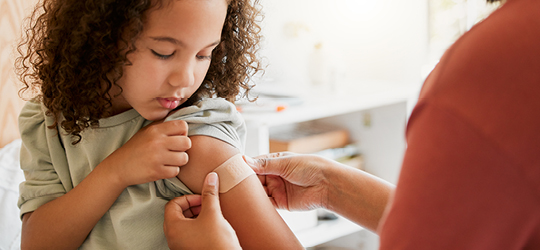
"Vaccines work by stimulating the immune system, giving something that looks like or is similar to the contagion, stimulating the immune system to produce antibodies that last and have memory, to fight against and protect against those specific infection in the future. It's important to remind people that vaccines are not new. They've been around for a very long time and are extremely safe," says Dr. Daniel Beardmore, an SSM Health Pediatrician in Wisconsin.
In Wisconsin 100,000 students, or 10.8%, did not meet minimum immunization requirements for attending school according to the Wisconsin Department of Health Services. There's been 278 cases of whooping cough (pertussis) so far this year. While this encompasses all age ranges, more than half of the cases are in adolescents aged 11-18 years. Fifteen infants were identified with whooping cough (pertussis) and three have been hospitalized. This is a significant increase over prior years.
Measles, chickenpox, and whooping cough (pertussis) are all highly contagious diseases that can have serious consequences, especially for vulnerable populations such as young children, the elderly, and individuals with weakened immune systems.
Measles
- As a highly contagious viral infection, measles can lead to severe complications, including pneumonia, encephalitis, and even death.
- The vaccine is administered as part of the MMR (measles, mumps, and rubella) series. It's recommended for children and adults to prevent the spread of the disease.
- Vaccination has led to a dramatic decrease in measles cases worldwide, but outbreaks can still occur in communities with low vaccination rates.
- In the United States, MMR coverage among kindergarteners is now below the 95% coverage goal, much lower in some communities, and is decreasing.
Chickenpox
- Caused by the varicella-zoster virus, chickenpox is a common childhood illness characterized by a rash of itchy blisters.
- While many cases of chickenpox are mild, the disease can lead to complications such as bacterial infections, pneumonia, and encephalitis, especially in vulnerable populations.
- The varicella vaccine is recommended for children and adults who have not had chickenpox to prevent the disease and its complications.
Whooping cough
- Also known as pertussis, whooping cough is a highly contagious respiratory infection caused by the bacterium Bordetella pertussis.
- The disease is characterized by severe coughing fits that can last for weeks and can be particularly dangerous for infants who have not yet been fully vaccinated.
- The pertussis vaccine, typically administered as part of the DTaP (diphtheria, tetanus, and pertussis) vaccine for children and the Tdap vaccine for adults, is recommended to prevent the spread of whooping cough.
Vaccines for measles, chickenpox, and whooping cough have been instrumental in reducing the incidence of these diseases and their complications. Vaccination not only safeguards individual health but also helps create a safer and healthier environment for everyone.
Check with your pediatrician's office or local SSM Health Pharmacy to schedule a vaccination appointment for your child.