DeAnna Dotson says her life became an emotional rollercoaster when a normal day at the restaurant where she worked as a waitress ended with a traumatic injury.
“I slipped on a freshly mopped floor and hit my head really hard,” remembered Dotson. “I went to the hospital and learned had a bad concussion. At that point, I was off work for two months to give my brain a chance to rest and heal.”
That meant no driving, no TV, and no digital devices or anything that would be mentally taxing during her recovery. Frustratingly, two years after the accident, she wasn’t getting any better.
“I still felt dizzy and had worse, more consistent migraines and nausea. I could not do stairs, and I was very irritable,” Dotson explained. “I had horrible memory issues. I thought I was losing my mind and I was on thin ice with family and friends who were putting up with my mood swings. I’m thankful my husband was so understanding and helpful.”
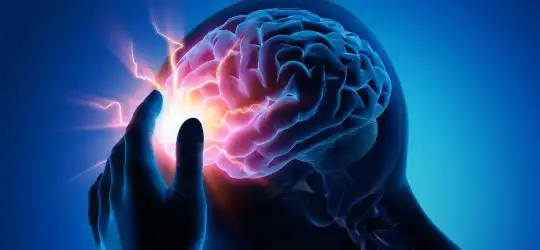
When she wasn’t seeing improvement, she went to Diana Van De Kreeke, PhD, an SSM Health neuropsychologist, where she learned she had post-concussion syndrome (PCS), a condition where symptoms persist longer than expected after a concussion. While most concussions resolve within a few weeks, PCS involves symptoms like headaches, dizziness, cognitive difficulties, and mood changes that linger for months or even years.
“DeAnna’s case is fairly typical in terms of how concussion cases get to me,” said Van De Kreeke. “There tends to be a focus largely on the physical symptoms, such as headache, dizziness, or other injuries. As time passes and some things improve, there is frustration that there has not been a return to normal functioning or normal activities.”
Neuropsychology can help people understand the process of cognitive recovery and test for changes or weaknesses related to their concussion. A neuropsychologist will also explain how thinking, physical changes to the brain, and mood affect one another.
“I wish I would have seen her right away because I learned I’m not nuts and I don’t have dementia,” Dotson said with a laugh. “I have post-concussion syndrome. Dr. Van De Kreeke taught me that I need to listen to my body to give my brain the rest it needs. She told me to sleep any time I wanted to sleep and to stop and take a break when I’m trying to put too many things in my head.”
Dotson says she has new hope for the future and would like to return to her hobbies, like making stained glass ornaments. She is making progress and credits Van De Kreeke.
“As a human being and clinician, there are few things that are more rewarding than knowing that I have been able to empower someone to get their life back, even if that means the need to find a new normal,” Van De Kreeke said. “It’s easy to stay focused on the negative or what is no longer possible, but it is much more beneficial to change the perspective to one of empowerment and moving forward.”
If you have a concussion and symptoms are not going away, talk to your primary care provider for a referral to see a neuropsychologist and find new ways to a fulfilling life.