Holiday party season is here and, as much as we love all our cute shoes, it is important to be mindful about their impact on our feet. SSM Health Orthopedic foot and ankle surgeon Dr. Sara Galli explains why some people develop bunions and how they can ease the pain.
 |
What is a bunion and how does it relate to shoes?
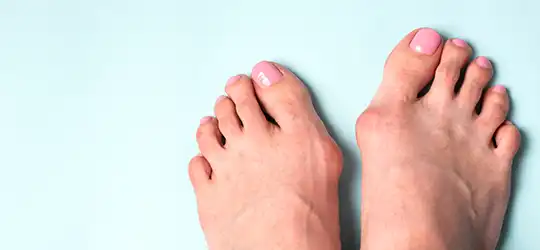
A bunion is a deformity of the big toe that leads to a prominence (or bump) at the base of the big toe. There are several reasons people get bunions including family history, arch collapse, and shoes.
When making decisions about shoes, Dr. Galli advises considering how long you will wear them, how accustomed you to the shoes, and what types of activity you will be doing.
“A person can tolerate any pair of shoes sitting at a dinner party, but standing all night at a New Year’s event is different,” she says.
Different types of shoes put different stresses on the feet. Flimsy ballet flats or unsupported dress shoes require arch stabilizers to do more work. Pointy-toed shoes crowd the toes and put more pressure on the ball of the foot. All of these situations can aggravate a bunion.
Dr. Galli avoids telling her patients what to wear and not wear, but advises weighing the situation and fashion “demands” against the potential discomfort that may follow. She also says there isn’t a definitive link between shoe choices and development of bunions.
“Good shoe choices don’t necessarily protect you, and similarly, bad shoe choices don’t condemn you either,” notes Dr. Galli.
Who gets bunions?
Just because you have made certain shoe choices in your lifetime, that doesn’t mean you will get a bunion. Dr. Galli says bunions can happen to anyone, but family history is certainly the biggest predictor.
“Women get them more than men,” she says, “Also, there seems to be a connection with changes in the body after having children as well. Certain injuries can also increase a person’s risk of developing a bunion.”
Are there treatments for bunions?
Treatment of bunions is driven by how much they bother a person. Bunions don’t go away, and no overnight devices or taping schemes will make the toe resume a normal position. However, some devices, toe spacers and wider shoes can ease symptoms.
“Not every wide shoe is unfashionable these days,” Dr. Galli shares. “Companies have become smarter to the fact that people want fashion and comfort.”
Sometimes a bunion continues to bother people even with every sensible shoe choice and device tried. In those cases, there are surgeries that can correct the crooked bones in the feet and straighten the toe.
 |
When should you see a doctor?
Dr. Galli provides 3 reasons it might be worth discussing your bunion with a doctor.
- You cannot find reasonable shoes
- The bunion hurts despite devices, shoes and medication
- The bunion is “bullying” the second toe creating what is known as crossover toe
People who have bunion surgery can get back to living a life without foot pain. If you’re experiencing the discomfort of bunions, an SSM Health orthopedic surgeon may help you regain mobility.