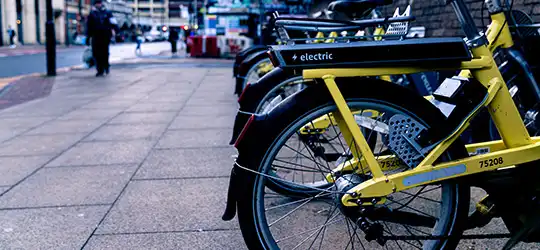
Was there an e-bike or e-scooter under your Christmas tree this year? As e-bikes and e-scooters gain in popularity, be aware that accidents involving the devices are also on the rise. The American College of Surgeons say that, while accidents are likely underreported, more than 20,000 people are injured riding e-bikes every year.1 About 3,000 of those injured end up hospitalized for their injuries.
SSM Health trauma and critical care surgeon Dr. Douglas Soltys says he’s seen a dramatic increase in these accidents – and many accidents involving the micromobility devices are preventable.
Popularity, speed lead to increased risk
E-bikes and e-scooters are more similar to small motorcycles than they are to their pedal powered counterparts. While models vary, on average an e-bike can easily go 20 to 25 miles per hour. E-scooters typically reach 15 to 20 miles per hour. The average recreational cyclist pedals at about five to eight miles per hour.
As more riders hit the road using electric devices, the risk of accidents goes up as well.
Most common injuries
Dr. Soltys says injuries from e-bikes and e-scooters really run the gamut: from scraped knees and “road rash” from low speed falls to serious head injuries and internal bleeding from higher speed collisions with cars. While these injuries can happen to riders of any age, he says patients ending up in the emergency room are often kids.
“We see a lot of younger people with injuries, and it really comes down to experience and comfort with the riding in the road with other vehicles,” he said. “Older riders typically are more aware of the rules of the road. They also tend to be more cautious when they’re riding these devices.”
As a trauma surgeon, Dr. Soltys says he commonly sees broken bones, internal bleeding, and serious head injuries including head bleeds, concussions, and skull fractures. Injuries from serious accidents can also cause paralysis or death.
Even minor crashes can cause a concussion, so keep an eye on any injured riders for at least 24 hours after the accident. Signs of a concussion include ongoing headaches, nausea, vomiting, vision changes, and sleepiness. If an injured rider has these symptoms, head to the nearest emergency department for care.
Most common accident causes
A variety of factors can contribute to potential accidents that cause serious injury. Some of the most common include:
- Low rider visibility: Many devices do not have pre-installed headlights or taillights. In low light conditions, not having these safety lights and not wearing reflective riding gear makes it hard for drivers to see riders on the road.
- Higher speed falls and collisions: Falling from a bike or scooter going 15 or 20 miles per hour creates much higher forces than when riders are going slower on traditional devices. Car collisions are also happening at a higher rate as more e-device riders share the road with them.
- Distracted riders: When riders are busy listening to music, texting or are focused on anything beyond the road, they miss seeing cars, other riders, pedestrians, or hazards in the road.
- New riders: Kids who are new to riding at these higher speeds – or who are unfamiliar with the rules of the road – are often at higher risk of accidents.
“Another factor for e-scooter riders is the size of the wheels. These devices have smaller wheels than bikes and other rideable vehicles, which means they don’t handle bumps and potholes very well,” said Dr. Soltys. “It’s really easy to flip over the handlebars or have a hard fall when you hit even a small bump in the road while riding at 15 or 20 miles per hour.”
Staying safe
If you or your child rides an e-bike or e-scooter, there are things you can do to reduce the risk of an accident.
Everyone should wear a helmet when riding these devices,” said Dr. Soltys. “Because of how fast these e-bikes and e-scooters can go, you really need a motorcycle helmet – not your typical bike helmet – because you want your entire head to be well-protected.”
Dr. Soltys also recommends making sure you’re easy to see on the road. If your micromobility device doesn’t come with factory-installed headlights and taillights, add them. When you’re riding in potentially low light situations, he also recommends adding a reflective vest to your riding gear.
To protect yourself from “road rash,” scrapes and other abrasions, Dr. Soltys recommends dressing like a motorcyclist: cover all visible skin with pants, long sleeves, and gloves.
When possible, avoid riding on the street, especially busy roads, during high traffic times. Riding on designated bike paths and sidewalks can help reduce the risk of being hit by a car.
Need care now? Find an SSM Health ER, Urgent Care or Express Care Clinic near you.
Electric bicycle safety and injury prevention. (n.d.). ACS. https://www.facs.org/about-acs/statements/statement-on-electric-bicycle-safety-and-injury-prevention/