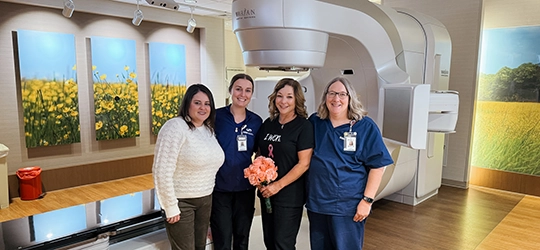
As a physician assistant, Kierstyn Block routinely assists surgeons in removing skin cancers at the SSM Health Aesthetic Center in Middleton, Wisconsin. But recently, she experienced skin cancer removal from a different perspective – as the patient.
“A co-worker noticed a strange bump on the back of my neck,” remembered Block. “I thought it was nothing, but it’s a good thing I got it checked and subsequently removed.”
It turned out to be basal cell carcinoma, the most common type of skin cancer, and it’s associated with frequent exposure to the sun.
“Back in the ‘80s when I was growing up, sunscreen wasn’t really a thing,” said Block. “I ran around outside as a little kid and I’m sure that is why I got it.”
Block notes that, while the type of cancer she got is the least dangerous type, “having basal cell increases your risk for getting melanoma, the most deadly skin cancer, so I now get thoroughly checked every six months for any new spots. And there are a lot of precautions I take that I think others should too.”
For maximum sun protection, Block advises:
- Sunscreen – a broad spectrum of 30 SPF or greater
- Hats with a 3-inch brim all the way around to protect your ears
- UPF (Ultraviolet Protection Factor) clothing
“I have a lot of UPF shirts that I wear all the time. My favorite ones are from Land’s End,” said Block. “I’m always reminding all of my family members to put their sunscreen on, put a hat on, and wear clothing meant to protect you from the sun’s ray. They call me the sunscreen czar.”
Even people with very dark skin should take the same precautions. While skin cancer isn’t as common in black and brown populations, it can still happen.
In addition to preventative measures, Block says people should never let a suspicious-looking spot go unchecked. Ask your primary care provider to examine any new spots on your skin and to check the areas you cannot see yourself.