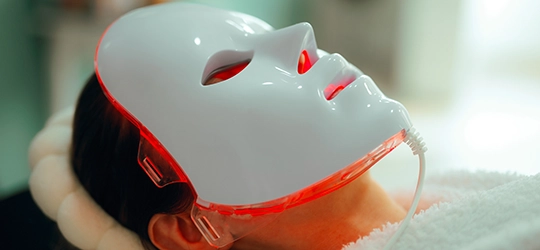
Initially used by NASA to grow plants and heal astronauts’ wounds in space, red light therapy has become a popular skin care treatment. Is it more than just a passing fad?
From stretch marks to cold sores to wrinkles and more, red light therapy is being touted as a treatment for many skin-related conditions. And, according to wellness coach and SSM Health Family Medicine Physician, Roopa Shah, MD, “It’s a widely accepted form of photodynamic therapy (PDT). This type of red light therapy is used to treat skin cancer and other cancers, psoriasis, acne, and warts.”
Understanding the process
In PDT, the patient is given a photosensitizer drug that is absorbed by diseased or damaged cells. That drug is then activated by a low-level red laser light to create a chemical reaction that destroys the problem cells.
Dr. Shah noted, “Red light therapy is thought to work by acting on the ‘power plant’ in your body’s cells – your mitochondria. With more energy, other cells work more efficiently at repairing skin and boosting new cell growth.”
Does it really work?
Various studies have supported the potential value of red light therapy for inflammatory conditions, wound healing, cosmetic issues, and even pain. As its popularity has grown, so has its accessibility. A number of devices are now being marketed for home use. Masks, hand-held wands, light boxes, and lamps are readily available online at a variety of price points.
While red light therapy has a history of success in medical settings, it’s hard to say how effective it is in other situations. “Honestly, it’s still too early to know if the therapy – and particularly at-home devices – really provide the benefits that are claimed,” Dr. Shah said.
“It’s also important to remember that most research is done on medical-grade, clinically supervised red light therapy,” she added. “Devices you buy for home use are likely less powerful than those used by dermatologists and other trained professionals in medical settings. So, you might not get the results you’re hoping for.”
Accessing treatment
If you want to try red light therapy, Dr. Shah suggests you talk to your doctor or a licensed skin care professional – like a medical aesthetician – about what you hope to get out of it. “They can guide you through what therapies might work best for your needs,” she said, “as well as help you understand how many treatments you may need to see results.”
Concerns about your skin? Find a dermatologist close to home and learn about the cosmetic services offered by SSM Health.