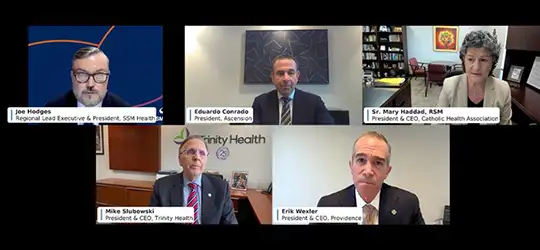
Stressing the potential negative consequences that federal Medicaid cuts could have on rural and other under-served Americans, SSM Health Regional Lead Executive Joe Hodges on Tuesday joined other health care executives and Catholic Health Association President & CEO Sr. Mary Haddad, RSM, in advocating against them.
“Everyone who walks through our doors, we are going to take care of them” regardless of whether they have commercial insurance, a government program like Medicaid, or no insurance at all, Hodges said. “This is the really important work that we are doing every day in Catholic health care.”
However, proposed cuts to the federal Medicaid program – which provides health insurance for one in five Americans who are low-income or suffer from certain disabilities – would impact the entire health care system, Hodges said. If coverage or reimbursement for these individuals is reduced, health systems would have to shift costs to others, and could see some operations become unsustainable.
That is especially important in rural areas, such as those served by SSM Health in Illinois, Missouri, Wisconsin, and Oklahoma, where Hodges was born, raised and serves as the health system’s regional president. Roughly 70% of hospitals in Oklahoma have a negative operating margin, including the one his mother relies on for critical services.
SSM Health strategically engages rural hospitals in affiliate relationships, aggregating services while building scale and efficiency to ensure their sustainability and communities’ access to care. On May 1, Elkview General Hospital became the health system’s seventh managed strategic affiliate hospital in Oklahoma, in addition to affiliates in Missouri, Illinois and Oklahoma.
“We have a crisis in rural health care” with many hospitals shutting down or offering only limited services, he said. “Any challenges that are associated with taking away access or reimbursement to rural hospitals makes them even more vulnerable.”
The same is true of urban zip codes with low incomes, high unemployment rates, and a high incidence of chronic disease.
Proposals being debated in the U.S. House of Representatives – including changes to Medicaid’s work reporting requirements, provider tax policy, state directed payments, and retroactive coverage provisions are most concerning to CHA and its members, Haddad said.
“Medicaid is not just a health program, it’s a lifeline,” she said. “It provides access to care for those in our nation who need it the most – poor and vulnerable children, pregnant women, the elderly, adults, and disabled individuals – while ensuring their dignity.”