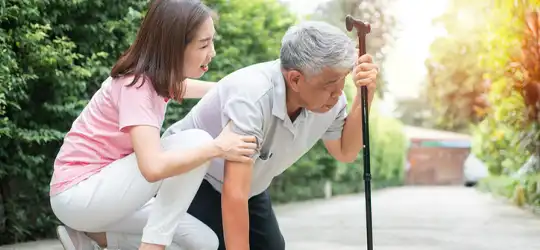
“It was a beautiful Saturday afternoon in April when I was helping a friend walk her two small dogs on a route we had taken numerous times when I felt my shoe catch on the pavement,” said Nancy, an SSM Health patient. “It all happened so fast. I tripped and landed on my face. Several months later I am still working to recover emotionally and physically from a broken nose, displaced teeth and panic attacks.”
According to the Centers for Disease Control, one in four older adults report falling every year and injuries from falls are one of the leading causes of death in the US.
“Falls can be absolutely devastating,” said Wendy Bianchetti, SSM Health community health worker. “While all falls are not preventable, we can all do some things to increase the safety factor in our own homes.”
Bianchetti says consider these action steps:
- Talk to your doctor. Unfortunately, most people who fall never tell their doctor. Being open about falls with your providers gives them the opportunity to evaluate your risk.
- Check your medications. They can have side effects such as dizziness or drowsiness, making falls more likely. Make sure your providers and pharmacist know about all the medicines you take and ask about potential interactions.
- Get yearly eye exams. Wear glasses with your most up-to-date prescription because being able to see well will help you get around more safely.
- Eliminate hazards at home. Because half of all falls happen at home, eliminating potential issues such as tripping hazards, clutter and poor lighting can all help lower the chance of falling. Installing grab bars in the bathroom or railings on stairs is also a great way to decrease your risk.
“It’s important to exercise too,” said Bianchetti. “Lower body weakness and balance problems can contribute to falls. Work on increasing your strength through activities like walking, water aerobics, tai chi or chair yoga.”
It took Nancy awhile to start exercising again and her sister bought her a walking stick that she used to regain her confidence.
“I am back to walking, but I am not quite so carefree,” she said. “I am not a person who is a high risk for falls. I do strength and cardio training, yoga, gardening and had been walking regularly. It happened so fast and was so unexpected and I don’t think I will ever understand why I didn’t put my hands out as protection. I look at the positive side in that my favorite hobby in the summer is my flower gardening and if I had broken my arm I would have missed my garden.”
If you or a loved one are at a high risk for falls, consider taking SSM Health’s safety assessment or eight-week community education class, "Stepping On," which helps teach people practical ways to reduce their risk of falls.