Prostate Cancer
Nearly one in seven men will be diagnosed with prostate cancer during some point in their life. Fortunately, the survival rate is extremely high, especially in cases where the prostate cancer is diagnosed early.
Get a personalized care plan from world class oncologists who take the time to listen and learn about you.
Discover innovative treatment options for prostate cancer personalized for the individual.
What causes prostate cancer?
Prostate cancer, like all cancers, is caused when genetic changes to DNA either cause or allow cells to grow out of control. Those cells can form tumors. Genetic mutations can be inherited at birth from a parent or acquired during your lifetime. About 10% of prostate cancers are caused by heredity. The balance are due to changes that occur to your DNA over time. Although genetic mutation can occur randomly, male hormones, diet, and inflammation are considered possible factors.
How is prostate cancer diagnosed?
Since there are few, if any, early signs or symptoms of prostate cancer, most cases are found through preventive screenings. That’s why those who have family history of prostate cancer, or are over the age of 50, should get screened on a regular basis. Diagnostic tests and procedures, such as PSA tests and digital rectal exams, are used to look for warning signs of prostate cancer but can’t actually confirm a diagnosis. If your doctor runs one of these tests and your results are abnormal, they will most likely recommend a prostate biopsy to confirm a prostate cancer diagnosis.
How is prostate cancer treated?
Localized prostate cancers typically grow slowly, without causing many problems. Because of this, aggressive treatment is not always necessary, allowing the patient to undergo a period of active surveillance to avoid the negative side effects of surgery or radiation. If your doctor suggests active surveillance, it will include ongoing observation of the prostate-specific antigens (PSA) and an occasional repeat biopsy.
Ultimately, you and your physician will work together to decide the best course of treatment for you. Regardless of the treatment option chosen, you can be confident of receiving class-leading care at SSM Health.
When a slow-growing, early-stage prostate cancer is diagnosed through biopsy, it is closely monitored by a cancer specialist using PSA testing (a laboratory test that measures the amount of prostate-specific antigen found in the blood) and MRI diagnostic imaging.
Patients with early-stage cancer who are not a candidate for radiation or surgical prostate cancer treatments, or whose cancer has returned following radiation, may be offered a cryotherapy option, which involves the use of very cold temperatures to freeze prostate cancer cells.
Cyberknife is a non-invasive robotic radiotherapy instrument that very precisely delivers SBRT (Stereotactic Body Radiation Therapy) to prostate cancer patients in only five treatments. The addition of a spacer gel prior to treatment, such as SpaceOAR or Barrigel, separates the prostate and the rectum to minimize the chance of radiation injury to the rectum during treatment.
In a robotic prostatectomy, the surgeon uses a robotic arm to remove the prostate in a minimally invasive procedure. The physician-guided robotic arm allows for greater precision than traditional surgery.
Varian TrueBeam is a non-invasive radiotherapy instrument that very precisely delivers either stereotactic, hypofractionated, or standard fractionated therapy via VMAT (Volumetric Modulated Arc Therapy) to prostate cancers. The addition of a spacer gel prior to treatment, such as SpaceOAR or Barrigel, separates the prostate and the rectum to minimize the chance of radiation injury to the rectum during treatment.
How is prostate cancer treated?
Localized prostate cancers typically grow slowly, without causing many problems. Because of this, aggressive treatment is not always necessary, allowing the patient to undergo a period of active surveillance to avoid the negative side effects of surgery or radiation. If your doctor suggests active surveillance, it will include ongoing observation of the prostate-specific antigens (PSA) and an occasional repeat biopsy.
Ultimately, you and your physician will work together to decide the best course of treatment for you. Regardless of the treatment option chosen, you can be confident of receiving class-leading care at SSM Health.
When a slow-growing, early-stage prostate cancer is diagnosed through biopsy, it is closely monitored by a cancer specialist using PSA testing (a laboratory test that measures the amount of prostate-specific antigen found in the blood) and MRI diagnostic imaging.
A type of radiation therapy where radioactive seeds are placed into the prostate. This is a very effective form of treatment as it allows for a very high dose of radiation to be delivered to the cancer while sparing adjacent tissues.
Small coils, called fiducials, are placed within the prostate which allows the medical team to visualize the location of the prostate and track the positioning of the gland while radiation is being administered.
Hormone therapy blocks production of specific hormones with medication. By blocking hormones, the growth of prostate cancer is sometimes inhibited.
In a robotic prostatectomy, the surgeon uses a robotic arm to remove the prostate in a minimally invasive procedure. The physician-guided robotic arm allows for greater precision than traditional surgery.
This is a synthetic gel that temporarily positions the rectum away from the prostate. It helps reduce the dose delivered to the rectum during prostate cancer radiation therapy. After 12-15 weeks, the gel is naturally reabsorbed by the body.
A piece of technology called a linear accelerator specifically designed to treat smaller fields and ultimately reduce short and long term side effects. The equipment is so targeted that there is an ability to offer shorter treatment durations (5 fractions) with minimal to no side effects.
Varian TrueBeam is a non-invasive radiotherapy instrument that very precisely delivers either stereotactic, hypofractionated, or standard fractionated therapy via VMAT (Volumetric Modulated Arc Therapy) to prostate cancers. The addition of a spacer gel prior to treatment, such as SpaceOAR or Barrigel, separates the prostate and the rectum to minimize the chance of radiation injury to the rectum during treatment.
How is prostate cancer treated?
Localized prostate cancers typically grow slowly, without causing many problems. Because of this, aggressive treatment is not always necessary, allowing the patient to undergo a period of active surveillance to avoid the negative side effects of surgery or radiation. If your doctor suggests active surveillance, it will include ongoing observation of the prostate-specific antigens (PSA) and an occasional repeat biopsy.
Ultimately, you and your physician will work together to decide the best course of treatment for you. Regardless of the treatment option chosen, you can be confident of receiving class-leading care at SSM Health.
When a slow-growing, early-stage prostate cancer is diagnosed through biopsy, it is closely monitored by a cancer specialist using PSA testing (a laboratory test that measures the amount of prostate-specific antigen found in the blood) and MRI diagnostic imaging.
A surgical procedure which involves complete removal of the prostate gland and surrounding tissues. This is typically done when the prostate cancer is confined to the prostate gland and hasn't spread to other parts of the body.
Varian TrueBeam is a non-invasive radiotherapy instrument that very precisely delivers either stereotactic, hypofractionated, or standard fractionated therapy via VMAT (Volumetric Modulated Arc Therapy) to prostate cancers. The addition of a spacer gel prior to treatment, such as SpaceOAR or Barrigel, separates the prostate and the rectum to minimize the chance of radiation injury to the rectum during treatment.
How is prostate cancer treated?
Localized prostate cancers typically grow slowly, without causing many problems. Because of this, aggressive treatment is not always necessary, allowing the patient to undergo a period of active surveillance to avoid the negative side effects of surgery or radiation. If your doctor suggests active surveillance, it will include ongoing observation of the prostate-specific antigens (PSA) and an occasional repeat biopsy.
Ultimately, you and your physician will work together to decide the best course of treatment for you. Regardless of the treatment option chosen, you can be confident of receiving class-leading care at SSM Health.
In a robotic prostatectomy, the surgeon uses a robotic arm to remove the prostate in a minimally invasive procedure. The physician-guided robotic arm allows for greater precision than traditional surgery.
Varian TrueBeam is a non-invasive radiotherapy instrument that very precisely delivers either stereotactic, hypofractionated, or standard fractionated therapy via VMAT (Volumetric Modulated Arc Therapy) to prostate cancers. The addition of a spacer gel prior to treatment, such as SpaceOAR or Barrigel, separates the prostate and the rectum to minimize the chance of radiation injury to the rectum during treatment.
How is prostate cancer treated?
Localized prostate cancers typically grow slowly, without causing many problems. Because of this, aggressive treatment is not always necessary, allowing the patient to undergo a period of active surveillance to avoid the negative side effects of surgery or radiation. If your doctor suggests active surveillance, it will include ongoing observation of the prostate-specific antigens (PSA) and an occasional repeat biopsy.
Ultimately, you and your physician will work together to decide the best course of treatment for you. Regardless of the treatment option chosen, you can be confident of receiving class-leading care at SSM Health.
When a slow-growing, early-stage prostate cancer is diagnosed through biopsy, it is closely monitored by a cancer specialist using PSA testing (a laboratory test that measures the amount of prostate-specific antigen found in the blood) and MRI diagnostic imaging.
A type of radiation therapy where radioactive seeds are placed into the prostate. This is a very effective form of treatment as it allows for a very high dose of radiation to be delivered to the cancer while sparing adjacent tissues. The SSM Health Brachytherapy Team has performed more than 800 brachytherapy procedures.
Patients with early-stage cancer who are not a candidate for radiation or surgical prostate cancer treatments, or whose cancer has returned following radiation, may be offered a cryotherapy option, which involves the use of very cold temperatures to freeze prostate cancer cells.
Cyberknife is a non-invasive robotic radiotherapy instrument that very precisely delivers SBRT (Stereotactic Body Radiation Therapy) to prostate cancer patients in only five treatments. The addition of a spacer gel prior to treatment, such as SpaceOAR or Barrigel, separates the prostate and the rectum to minimize the chance of radiation injury to the rectum during treatment. The SSM Health Cyberknife Center has performed more than 500 Cyberknife procedures.
In a robotic prostatectomy, the surgeon uses a robotic arm to remove the prostate in a minimally invasive procedure. The physician-guided robotic arm allows for greater precision than traditional surgery.
Transurethral Ultrasound Ablation (TULSA) is a minimally invasive, MRI-based treatment for prostate cancer. Instead of surgery or radiation, this procedure relies on heat to destroy diseased tissue. Using real-time images, an ultrasound probe is guided through the urethra robotically. TULSA targets specific areas of concern while protecting the healthy tissue around it. The procedure is low risk for causing urinary incontinence or erectile dysfunction. Most patients experience minimal pain and downtime.

Varian TrueBeam is a non-invasive radiotherapy instrument that very precisely delivers either stereotactic, hypofractionated, or standard fractionated therapy via VMAT (Volumetric Modulated Arc Therapy) to prostate cancers. The addition of a spacer gel prior to treatment, such as SpaceOAR or Barrigel, separates the prostate and the rectum to minimize the chance of radiation injury to the rectum during treatment.
SLUCare Physician Group - Cancer Care - Des Peres

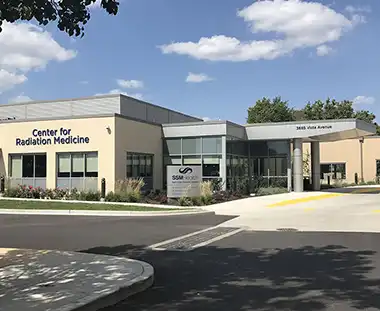
SSM Health Saint Louis University Hospital Center for Radiation Medicine