
Breast Health
We are dedicated to delivering advanced diagnostics with compassionate care.
Whether it’s time to schedule a mammogram, ask about a symptom, or navigate a recent diagnosis, you can trust our breast health specialists. We’re dedicated to providing you with comprehensive care backed by the latest medical advancements.
To serve you better, please set your location for information on services available in your area.

In addition to the most advanced surgical procedures, we offer multiple cancer therapies to best meet the needs of each individual patient.
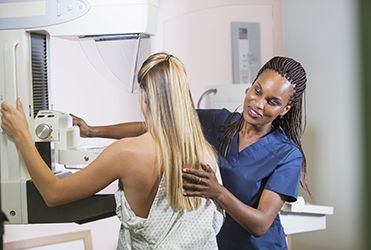
Discover what you can expect during a mammogram – and how SSM Health is using technology to make it more accurate.
When to talk to your provider about a breast concern
If you notice a lump, pain, changes in shape, skin changes, or nipple discharge – check in with your doctor. Even if you’ve already had your annual mammogram, small changes always matter.
Breast health services
Services may vary by location
- Clinical Breast Exams
- 3D Tomosynthesis Mammograms
- Digital Mammography
- Mammograms screened within 24 hours
- Ductograms
- Breast Ultrasound
- Breast MRI
- Stereotactic Biopsy
- Surgical Consultations
- Genetic Testing/Risk Management Program
- Support Groups
- Free Screening Services

What is a mammogram?
A mammogram is a non-invasive breast exam that can often detect breast cancer long before it can be felt, when it is small and easiest to treat. During a mammogram, a technologist will use a special machine to take X-rays of your breasts. The machine compresses the breast between a plexiglass paddle and an X-ray detector plate to generate an X-ray image of the breast tissue.
This process does involve some brief pressure on the breasts to create the highest quality image. However, for the vast majority of women, it is described as a mild and brief discomfort.
After the X-ray, a specially trained physician (diagnostic radiologist) reviews the images to identify any areas of abnormality.
What is the difference between a screening mammogram and a diagnostic mammogram?
Screening mammogram
- Purpose: Routine check for breast cancer when you have no symptoms
- Recommended for: Women age 40 and older, or younger if there's a family history or higher risk
- How to schedule: No doctor's order needed – you can schedule directly online.
- Frequency: Every year
Diagnostic mammogram
- Purpose: A closer look at a specific concern or follow-up from a screening
- Recommended for:
- Patients whose screening mammogram showed an abnormality
- Anyone with breast symptoms (lumps, discharge, pain, etc.)
- Those being monitored every six months
- Patients diagnosed with breast cancer in the past two years
- Additional screenings: Patients often receive a breast ultrasound the same day.
- Results: Usually available the same day via MyChart
How often are breast abnormalities typically found in a mammogram screening?
About 10% of screenings require a diagnostic mammogram to clarify findings. During a diagnostic mammogram, the technologist takes additional images. These will provide the radiologist with a detailed view of the breast from several different angles. A breast ultrasound also might be done the same day.
A lump does not always mean cancer.
Not every lump means cancer. Many other conditions can affect breast tissue. We understand that mammograms can feel intimidating and sometimes uncomfortable. It’s normal to feel anxious about results, especially if you’ve noticed a lump or change. Our team is here to support you every step of the way.

Are You at Risk for Breast Cancer?
What mammogram technology does SSM Health offer?
3D mammography technology reduces false alarms.
Digital Breast Tomosynthesis (DBT or “3D” mammography) is used for screening and diagnostic mammograms. This technology is an advancement in existing digital mammography technology. In traditional mammography, the details of the breast are viewed in one flat image. "3D" mammography shows the breast in layers. This reduces overlapping tissue and helps doctors get more precise results. The technique reduces false alarms and helps improve the detection of some types of breast cancer.
What mammogram technology does SSM Health offer?
Digital Mammography
Digital mammography makes it possible to view the breast X-ray images on a computer monitor. This makes them available to the doctor more quickly for analysis. The digital process also requires fewer total exposures, leading to a shorter procedure and less discomfort.
3D Mammography
Digital Breast Tomosynthesis (DBT, or “3D” mammography) is used for screening and diagnostic mammograms. This technology is an advancement in existing digital mammography technology. In traditional mammography, the details of the breast are viewed in one flat image. "3D" mammography shows the breast in layers. This reduces overlapping tissue and helps doctors get more precise results. The technique reduces false alarms and helps improve the detection of some types of breast cancer.

Easing mammogram anxiety
What every woman needs to know about pain and comfort during the imaging

Early detection is key: SSM Health breast health navigator shares a story of hope
“There is a small spot appearing on your mammogram scan. It doesn’t look abnormal but let’s do a biopsy to be sure.” These were the words that set Amy Williams on her path to discovering her purpose.
Common questions about mammograms and breast health:
Breast size is not directly linked to breast cancer risk. However, being overweight or obese is linked to increased cancer risk. Some studies have indicated that tumors may be larger when detected in large breasts. This is believed to be due to the increased difficulty finding small abnormalities in a large amount of screened tissue.
Mammograms are a type of X-ray that use a low dose of radiation to obtain an image. Experts agree that the benefits of mammogram outweigh any negative effects of radiation exposure. Your SSM Health Women’s Health provider is available to speak with you about the benefits versus risks of receiving a mammogram.
Yes, males account for about 1% of all breast cancer cases. If a male notices a lump within their chest tissue, it is important for them to get a mammogram. Even though they have less tissue, a mammogram screening can still be done with little discomfort.
A monthly breast self-exam is recommended to check for any changes or areas of concern. Menstruating women should perform this a few days after your period ends. Other women should choose a day that’s easy to remember, like the first day of the month.
- Lie Down: Lie on your back with your right arm behind your head. This helps spread your breast tissue evenly.
- Use Your Fingers: Use the three middle fingers of your left hand to check your right breast. Make small, overlapping circles.
- Use varying amounts of pressure: Use light pressure for tissue just under the skin and medium pressure for deeper tissue. Use firm pressure for tissue closest to your chest.
- Follow a Pattern: Move your fingers up and down from your collarbone to your ribs to cover the whole breast.
- Switch sides: Use your right hand to check your left breast the same way.
- Look in the mirror: Stand with your hands on your hips and look for changes in shape, size, or skin.
- Check underarms: Raise one arm and feel under your armpit for lumps. Repeat on the other side.
If you have questions or concerns about performing a breast self-exam, contact your SSM Health Women’s Health provider.
Depending on location, it can take up to several days for a radiologist to evaluate a screening mammogram and report the findings to your doctor. You will receive a notification in MyChart or a call from your physician. Results are usually available on MyChart the same day for a diagnostic mammogram.
If you’ve had mammograms elsewhere, inform the SSM Health scheduler so prior exams can be obtained before your appointment. Delays might occur when comparisons aren’t available.
For patients with insurance, screening mammography is considered a “covered service” and there is no out- of-pocket cost. For uninsured or under-insured patients, SSM Health can help provide this potentially life-saving service at a reduced cost or free of charge.
For most diagnostic mammograms and breast ultrasounds, you may have an out-of-pocket cost that will vary by insurance. To receive an estimate on your out-of-pocket cost, find your testing location and use our price transparency tool in MyChart.
Mammography is particularly effective at detecting invasive ductal carcinoma (IDC), which represents 80% of invasive breast tumors, and ductal carcinoma in situ (DCIS). Both of these tumors are visible early on. More diffuse tumors, such as invasive lobular carcinoma (ILC), can be harder to spot on a screening mammogram.
Only about 10% of abnormalities spotted on a screening mammogram are actually diagnosed as cancerous. Women with dense breasts or cysts are often called back when findings are inconclusive or suspicious. This is referred to as a false positive. Subsequent testing will be used to get an accurate diagnosis.
Your mammogram is like a fingerprint – completely unique to you. The first one serves as a baseline, allowing your health care providers to track changes and compare results over time.
If you’ve had mammograms elsewhere, inform the SSM Health scheduler so prior images can be obtained before your appointment. These will be used to better understand your breast structure and identify any changes. Delays might occur when comparisons aren’t available.

Breast Care at SSM Health Saint Louis University Hospital - West Pavilion



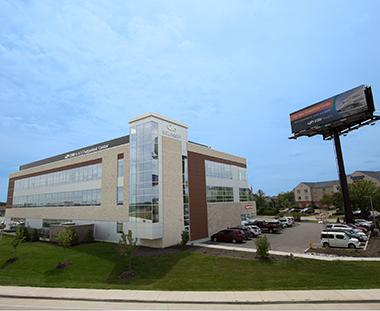








Imaging Services at SSM Health Dean Medical Group

Imaging Services at SSM Health Dean Medical Group
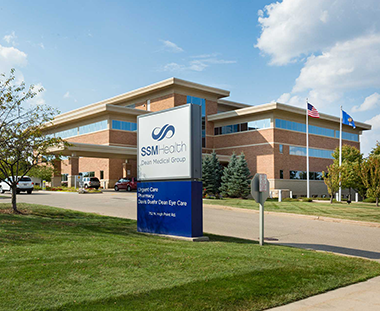
Imaging Services at SSM Health Dean Medical Group

Imaging Services at SSM Health Dean Medical Group









Page reviewed by: K.Michael Schraff, MD, February 2026