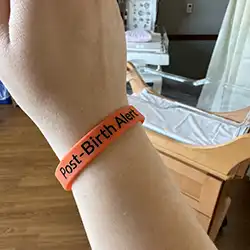
Since January, more than 1,500 women across Wisconsin have received bracelets and important postpartum education in a new post-birth alert program launched by SSM Health in Wisconsin. The initiative aims to improve maternal health outcomes and potentially save lives by using bright orange alert bracelets to signal recent childbirth to medical teams, especially in emergency situations.
People are using the post-birth alert bracelets as intended
“The program is going well,” said Nancy Patrick, Clinical Nurse Specialist at SSM Health St, Mary’s Hospital - Madison. “We have had patients return to the emergency room for revisits and show it to the registration staff to let them know that they are postpartum patients. The bracelet serves as a crucial visual indicator to consider post-pregnancy complications in their assessments and care plans.”
Complications after pregnancy
New mothers face a heightened risk of serious complications in the weeks following childbirth, including:
- bleeding/hemorrhage
- preeclampsia/eclampsia and high blood pressure
- sepsis
- perinatal depression
- substance use disorders
- Cardiomyopathy (heart conditions)
- Venous thromboembolism (blood clots)
The bracelets could save lives by making emergency responders and clinicians aware of potential complications earlier in an emergency and allow for rapid diagnosis and treatment.
Patrick says the staff comments have been positive like “it caught my eye and was helpful” and “it’s a good addition to postpartum education and discharge.” She listed three real life scenarios when the post-birth alert bands in the Emergency Department:
- A 35-year-old woman, two weeks postpartum, arrived with headache, hypertension, and bilateral lower extremity swelling. The patient didn’t mention her recent vaginal delivery, but a post-birth alert band was in place.
- A 28-year-old woman, five weeks postpartum, arrived with dizziness and hypertension. A post-birth alert band was in place and the recent delivery was discussed between patient and nurse.
- A 31-year-old woman, four weeks postpartum, arrived with dizziness, headache, and hypertension requiring magnesium infusion. A post-birth alert band in place.
Including Emergency Medical Services (EMS) in the post-birth alert bracelet program
SSM Health is also working with local EMS partners to ensure women wearing the post-birth alert bracelet receive prompt and specialized emergency care.
“This approach combines education, a visual identifier, and coordinated emergency response,” noted Patrick. “This is an important step toward improving maternal health outcomes in Wisconsin and beyond.”
Employees give feedback on the program
Here are a just few of the comments SSM Health employees have made:
“As a post-partum stroke survivor almost seven and a half years ago, I absolutely love this idea! Kudos to the Wisconsin team for starting this safety initiative!”
“This is beautiful. I went through this after my second birth. I believe they should wear it longer.”
“I think this is a wonderful idea. I have known several friends that have had complications with postpartum issues and would have benefitted from this program. Great job SSM for helping new moms and educating the community.”