Received a Call About Medicare? A "Free" MyChart Kit? It's Probably a Scam.

by SSM Health

Scammers often try to take advantage of trusted organizations to collect personal information. Recently, healthcare organizations across the country have reported fraudulent phone calls and emails that use Medicare, MyChart or healthcare provider names to appear legitimate.

At SSM Health, we want to help you recognize these scams and protect your personal information.
Watch for Fraudulent Medicare Phone Calls

Some individuals have reported receiving phone calls that appear to come from a healthcare organization. The caller may claim that Medicare information needs to be updated and then ask for personal information, including Medicare numbers or other sensitive details.

If you receive a call like this, remember:

  • SSM Health will not call you unexpectedly and ask for your Medicare number, passwords or verification codes.
  • Do not provide personal, financial or health information over the phone unless you initiated the call and know you are speaking with a trusted representative.
  • Hang up if something feels suspicious.

Be Aware of Fake "MyChart Medicare Kit" Emails

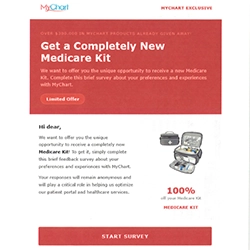
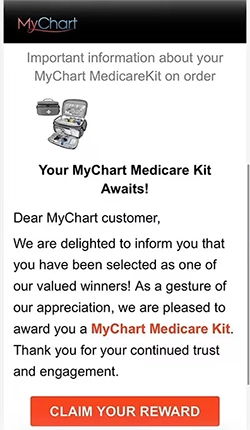
Healthcare organizations nationwide are warning patients about phishing emails that use the MyChart name or logo. These messages may offer a free "MyChart Medicare Kit," "Senior Health Package" or other reward in exchange for clicking a link or completing a survey.

These emails are scams and are not sent by SSM Health or MyChart.

A scam message may:

  • Use the MyChart name or logo.
  • Offer a free Medicare kit, health package, gift or reward.
  • Ask you to click a link to claim an offer.
  • Request personal information or account details.
  • Create a sense of urgency.
  • Come from an unfamiliar email address or website.
  • Contain spelling errors or unusual wording.

How to Protect Yourself

A few simple precautions can help keep your information safe:

Check the Sender and Website

Before clicking a link, carefully review the sender's email address and the website address. Scammers often use addresses that look similar to legitimate organizations.

Scam MyChart email screenshot

Scam MyChart email

Example scam email

Never Share Passwords or Verification Codes

Neither SSM Health nor MyChart will ask for your password or verification codes through email, text message or phone calls.

Be Skeptical of Free Offers

Offers for free Medicare kits, prizes, rewards or gifts are often used to lure people into sharing personal information.

When in Doubt, Contact Us Directly

If you're unsure whether a message is legitimate, contact SSM Health using a trusted phone number or website rather than responding to the message.

What to Do if You Think You Interacted with a Scam

If you clicked a link, shared information or entered login credentials:

  • Change your password immediately.
  • Review your MyChart account information.
  • Contact your bank or credit card provider if you shared payment information.
  • Report the message as spam or phishing.
  • Contact your healthcare provider if you have concerns about account security.

A Reminder

Scammers frequently change their tactics, but one thing remains true: if a message pressures you to act quickly, asks for sensitive information or offers something that seems too good to be true, take a moment to pause and verify before responding.

Your privacy and security are important to us. By staying alert and sharing these tips with family and friends, you can help protect yourself and others from fraud.

Not feeling well and need to be seen today? SSM Health has you covered.

Virtual Care Options