
Curriculum
We have a flexible robust curriculum. One of our objectives is to listen to what the residents’ goals are for practice and help them achieve them. Most of the rotations are on the St. Anthony campus.
| Block | PGY1 | PGY2 | PGY3 |
| 1 | Orientation | Family Medicine Service | Family Medicine Service |
| 2 | Orthopedics/Family Medicine Center (FMC) | Family Medicine Service - BRZ | Family Medicine Service |
| 3 | Family Medicine Service | Peds Ambulatory | Gynecology |
| 4 | Family Medicine Service | Flex Month | Cardiology |
| 5 | Family Medicine Service | Behavioral Health/Family Medicine Center (FMC) | Orthopedics |
| 6 | Family Medicine Service | Pediatric Emergency Medicine | Nephrology |
| 7 | Pediatric Inpatient | Obstetrics | Urology/Family Medicine Center (FMC) |
| 8 | Pediatric Newborn | Community Medicine | Pediatrics Ambulatory |
| 9 | Obstetrics | Health Systems | Geriatrics |
| 10 | Obstetrics | ICU | Dermatology/Family Medicine Center (FMC) |
| 11 | Surgery | Otorhinolaryngology / Clin-IQ | Elective |
| 12 | Emergency Medicine | Elective | Elective |
| 13 | Elective | Elective | Elective |
Orientation
Orientation is five weeks of getting to know your fellow classmates and obtaining a solid foundation for residency. It includes an internal medicine bootcamp, certification in ACLS, NRP, ALSO and PALS, common procedures of residency, how to do a spiritual assessment, orientation to EPIC in the inpatient, obstetric and clinic settings and time on the obstetric and medicine services.
Pediatrics
Pediatric training is a combination of hospital and outpatient pediatrics. Three rotations – newborn, inpatient and emergency – are done at the Oklahoma Children’s Hospital OU Health, 10 minutes from St. Anthony. Additionally, two ambulatory pediatric rotation will be done with busy SSM Health community pediatricians.
Clin-IQ
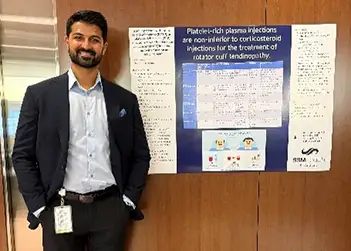
Clin-IQ is our rotation to focus on scholarly activity. Residents develop a clinical question and research the answer. They produce a paper for publication and a poster to disseminate their findings. We will be incorporating artificial intelligence into the process this upcoming year.
Advocacy
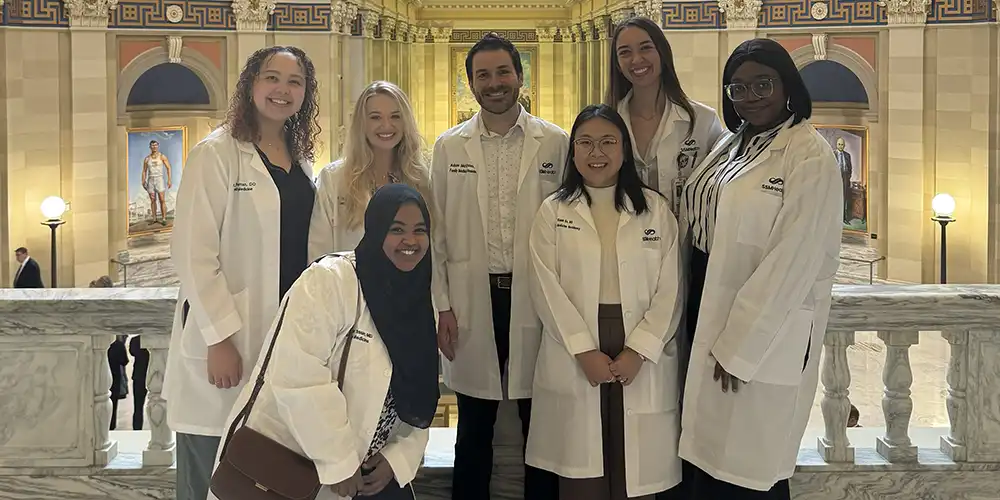
Advocacy is our newest curriculum that we are adding this academic year with lectures from state leaders and trips to the capitol. We want residents to have the skills to be able to speak up for the profession of family medicine and for the care that their patients need.
Community Service
Residents are required to complete three community service activities per year. The residents care for patients at two free clinics.
Curriculum
Our didactics include noon lectures on Monday and Friday and then a full afternoon on Wednesday.
| Monday | Wednesday | Thursday | Friday | |
| Week 1 | Resident Faculty Meeting | 1st & 2nd: DO - OMT MD – board questions 3rd: AAFP Video 4th: Balint 5th: R1 EBM / R2,3 Journal club 6th: Medicine lecture |
Ethics/ EPIC/ Personal finance/ Patient Safety (each 3/yr) | |
| Week 2 | Chiefs Meeting | 1st: Wellness Tools 2nd: Behavioral Medicine 3rd: AAFP Video 4th: Mystery Case 5th: Class based didactics 6th: Medicine lecture |
Specialty lectures | |
| Week 3 | Board Review Questions | FMC Business Meeting Quality Improvement Procedure Conference |
Bible Study (optional) | Value Based Care/ Hospital Track/ Advocate meetings (each quarterly) |
| Week 4 | Grand Rounds (2 per session) | 1st: OB chart review & OB topic 2nd: M&M 3rd: Resident Led Wellness 4th: AAFP Video 5th: Class based didactics 6th: Medicine lecture |
Specialty lectures |
Mystery Case is one of our most liked educational sessions. Residents work in teams to compete to solve a case in the most cost-effective way.
For our class based didactics we use the Yale Ambulatory Curriculum and the NEJM.
Our Family Medicine Center is a state-of-the-art, 32-room clinic with an additional procedure room, strategically located across the street from the hospital in an urban, underserved community. Serving over 7,000 patients—most of whom are on Medicaid and Medicare—our clinic is deeply committed to addressing health care disparities. Residents have the opportunity to provide compassionate care to complex vulnerable populations. First-year residents manage up to six patients per half-day, second-year residents care for eight, and third-year residents see up to ten patients per half-day. In addition, our clinic offers specialized clinics in OB ultrasound, osteopathic manipulation, dermatologic procedures, and geriatric assessments, ensuring that residents receive comprehensive, hands-on training.
Team Based Care
We have case management, pharmacy support for our hospital follow-ups and an in-clinic psychologist to help with counseling and ADHD and autism assessments.
Medication for Opioid Use Disorder
Our MOUD program equips family medicine residents with the skills and knowledge to provide compassionate, evidence-based care for patients with opioid use disorder. Residents receive training in buprenorphine prescribing, harm reduction strategies, and integrated behavioral health approaches.
Food Pantry
We have a partnership with our local food bank and are able to serve our patients with food insecurity with boxes of food. We also partner with a local garden who provides fresh produce for our patients as well.
Reach Out and Read
We are in our sixth year of partnering with Reach Out and Read. Reach Out and Read is a program that promotes early literacy by providing age-appropriate books from newborn to 5 years old. Residents learn how to assess developmental milestones with the book.
Medical Legal Partnership
Through a partnership with Legal Aid of Oklahoma, we have an attorney in our clinic that is able to help patients with multiple legal issues that affect their health such as housing and disability.
Our residency offers inpatient training at a community hospital. A big advantage is the lack of an internal medicine program at the same hospital, which means that our residents do not have to “compete” for complex patients. We have a robust service which allows residents to practice ICU medicine in a stepdown setting (no mandatory intensivist consult for stepdown ICU patients).
Because of our urban underserved location, we admit many patients with complex medical and social needs. During orientation, residents complete a two day long internal medicine bootcamp to help bring everyone up to speed on inpatient topics. This includes topics on acute respiratory failure, heart failure, sepsis, electrolyte management, and how to read EKGs and chest x-rays. There is also a series of “bread and butter” inpatient lectures covering core hospitalist topics during our academic afternoons (three lectures per block, plus four core hospitalist lectures a year).
Residents also have the opportunity to complete rotations with the Metro private hospitalist team. Many of these attendings are graduates of our program, which is testament to the quality of our inpatient training. This rotation allows residents to take on a larger census of patients and experience more independence. Third year residents have the opportunity to take an inpatient rotation and practice being a “Junior Attending” and leading the team.
At our hospital, we are fortunate to have many opportunities to learn inpatient procedures like paracentesis, thoracentesis, and central line insertion. In fact, our residents have gotten so proficient at central line insertion that they have been given the opportunity to staff the hospital central line team. Our residents also participate in Rapid Responses, the Code Team, and Stroke Codes at our hospital. In 2024, the hospital implemented a program in which the Family Medicine inpatients are preferentially rounded to the 10th floor, which makes bedside rounding easier since our patients are clustered together. Every weekday, upper-level residents attend “Multi-Disciplinary Rounds” on the 10th floor with a case manager, pharmacist, and the bedside nurse which helps residents learn how to care for patients in a team-based setting.
In 2025, we restructured our inpatient rounding process based on feedback from our residents. This allows for more independence for our residents during the handoff process and more time for inpatient rounds, where the bulk of learning happens on the inpatient service. We pride ourselves on the hands-on nature of our inpatient medicine rounds. In the past, rounds have included visits to the radiology reading room to speak with radiologists about imaging studies, visits to the pathology lab to speak with pathologists about biopsy results and view slides under the microscope, bedside point of care ultrasound, and other hands-on activities.
We deliver patients of our own clinic as well as patients from the Variety Care health centers (an FQHC in Oklahoma City with an emphasis on serving Spanish speaking patients). A major strength of our program is that our family medicine faculty provide their own C-section backup. This means when our laboring patients get an acute complication such as needing an emergency Cesarean section, we can continue their care and you don’t lose out on learning. Residents who are interested in OB can get many vaginal deliveries as well as primary Cesarean sections. The several faculty have OB fellowship training.
Three competency levels are available to residents:
- Ambulatory competency – not planning on doing obstetrics as a part of their future practice. Needs to be competent on call.
- Non-surgical advanced competency – planning on doing obstetrics as a part of their practice, but not c-sections.
- Surgical advanced competency - planning on doing obstetrics as a part of their practice, including c-sections.
| Ambulatory | Non-Surgical Advanced | Surgical Advanced | |
|---|---|---|---|
| Vaginal deliveries | 20 | 80 | 80 |
| C-assits | 0 | 5 | 10 |
| Continuity OBs | 5 | 20 | 20 |
| Laceration repair | 0 | 5 | 5 |
| C-section primary | 0 | 0 | 50 |
| Assisted deliveries (vacuum) | 0 | 5 | 5 |
St. Anthony Family Medicine Residency (FMR) is a DO-friendly environment where the resident will have autonomy to utilize their osteopathic skills often in both inpatient and outpatient settings. Extensively trained core faculty also provide one-on-one training in the dedicated OMT clinics, and as arranged by residents on inpatient services.
Our goal for you is that as you train, you are developing the skills and mindset to use Osteopathic Principles and Practice (OPP).
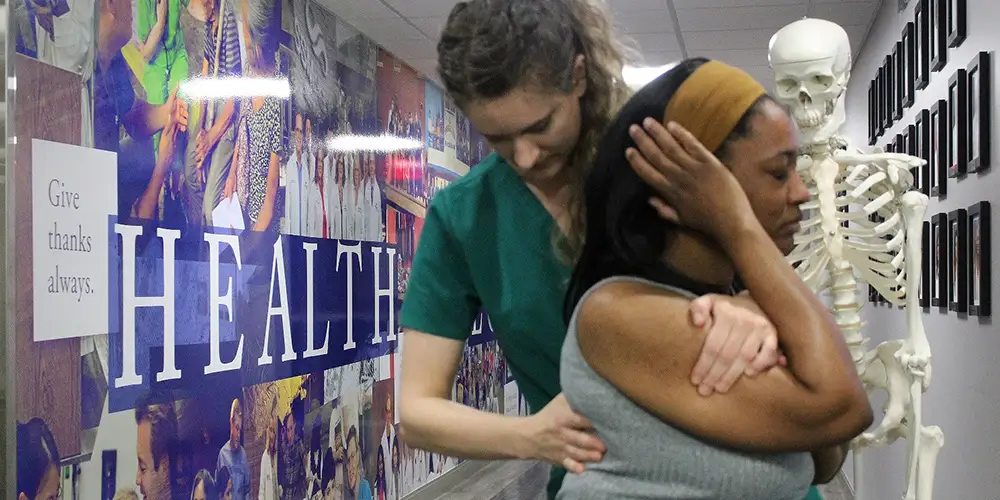
Elements of the didactic portion of the curriculum as follows:
- Osteopathic OSCEs in orientation to test your osteopathic skills and be signed off so you can independently perform OMT on your patients.
- Case-based rotating curriculum with workshops once per block, with hands-on training, and opportunity to share your unique skills with others.
- Dedicated OMT clinic roughly twice a week with direct faculty teaching
- 2nd year osteopathic grand rounds presentation, to demonstrate your knowledge of osteopathic principles and physiology to your peers.
- 2nd year Clin-IQ project expected to have an OPP focus included in topic.
- ACOFP website access specifically for residents to help you pass your OMT hands-on board exams with distinction.
- Abundant resources on the Oklahoma State University (OSU) library website, including helpful library assistants in their library who are cognizant of the osteopathic outlook.
- Faculty open to special arrangements for osteopathic cases in hospital and clinic, when schedule allows.
- Monthly city-wide osteopathic study group: residents are invited to join whenever possible.
Elements of the longitudinal osteopathic curriculum:
| PGY1 | PGY2 | PGY3 | |
|---|---|---|---|
| OSCE | Yes | ||
| Annual Assessment | Yes | Yes | Yes |
| OMT Clinic experience | 3-4 per year on outpatient rotations | 1-2 per block, depending upon rotation | 1-2 per block, depending upon rotation |
| Coding for osteopathic treatment | With faculty assistance | Expected to be independent | Required to be independent |
| Monthly Workshop | Attend when not off-site | Expected to be independent | Required to be independent |
| Outpatient encounters required | 20 | 40 | 60 |
| Inpatient encounters required | 6 | 4 | 2 |
| Presentations | Required to present an osteopathic grand rounds case to the residency | Encouraged to have grand rounds presentation address OPP | |
| Research | Clinical question encouraged in each OMT clinic | Required to address OPP in Clin-IQ presentation | Encouraged to address OPP in QI project |
Procedure Conferences
Once a block, an afternoon is used to teach procedures, usually the third week of the block. Below are the topics per conference by resident year. POCUS will be incorporated into most conferences.
| Topic | PGY1 | PGY2 | PGY3 | |
| Orientation |
Basic ultrasound and intro to OB US |
Basic US; limited first trimester evaluation; limited second/third trimester evaluation | RUSH: Rapid US for shock and hypotension |
|
| Block 1 | Leadership/ Communication/ Team Dynamics |
Leadership/teamwork - How to be a good intern, how to do good hand offs. | Preparation for second year | Leadership/ teamwork |
| Block 2 | Derm | Suturing Punch Shave |
Excisional Sebacious cyst Cryotherpy |
Botox with Dr Bogle |
| Block 3 | Hospital Procedures | Radiology Lumbar puncture Paracentesis Central Venous Catheter POCUS for each procedure |
Ventilator management Chest tube placement Thoracic vent POCUS: Pulm/BLUE protocol |
Ophthal POCUS - FM fac Slit lamp, eye FB removal, |
| Block 4 | Podiatry | Monofilament exam Corns/ Callous shaving Nail trimming Diabetic shoes Warts removal |
Ingrown toenails Digital block Wound care |
Taping, orthotics, gait analysis, foot problems |
| Block 5 | Ortho-injections with utilization of ultrasound |
Shoulder injection |
Sclerotherapy with Bogle - confirmed | |
| Block 6 | Cardiology | Murmurs RDA | Exercise treadmill CDO | Advanced Cardiology |
| Objective: echocardiogram basic skills including subxiphoid, parasternal long/short, apical 4 chamber, LV contractility to assess systolic function, RV size to assess R heart strain and possible of PE, measurement of IVC to approximate volume status. Adding aorta: abdominal aortic aneurysm screening, identification of vertebral shadow, aorta, IVC, iliac bifurcation, scan from xiphoid to umbilicus, Doppler waveform imaging; CLUE exam. Can divide up if desired | ||||
| Block 7 | Spirituality | Poverty Simulation, Malpractice, Spiritual Care | ||
| Block 8 | GYN | Bartholin cyst drainage Cervical polyp removal Fine needle asp. Breast POCUS: Breast |
Diaphragm fitting/ Pessary fitting Endometrial biopsy Cervical dilatation D&C POCUS: Adnexal masses |
Vulvar biopsy Iud insertion Implanon placement/removal Contraception ethics POCUSL IUD Placement, uterine stripe |
| Block 9 | GI / GU | Bladder cath NGT/feeding Fecal disimpaction Digital rectal exam Prostate Exam |
EGD | Urodynamics Anoscopy Excision thromb. Hemorrhoid I&D perirectal abscess bladder US and measurement - |
| POCUS: urinary retention and PVR; can divide these sections up differently if desired | POCUS: Evidence of ureteral stone or obstructive process: identify mild,moderate and severe hydronephrosis; | POCUS: biliary/abdominal basic US skills; assess for symptomatic cholelithiasis; assess for acute cholecystitis; assess for CBD obstruction; | ||
| Block 10 | Ultrasound | Musculoskelatal & IP POCUS | ||
| Block 11 | Obstetrics | Vaginal laceration repair Cases/c-section Pph, manual extract placenta POCUS OB |
||
| Block 12 | Ped emergencies | Evaluating the sick child | NRP recertification | Urgent care fb ear, ring removal, fish hook, epistaxis ant pack, io, zipper, tissue adhesives, Subungal hematoma release, Anaphylaxis |
| Block 13 | Ortho | Casting/ Splinting POCUS: fractures |
||
Hospital Procedures
Residents have the opportunity to learn paracentesis, thoracentesis and central lines.
Outpatient Procedures
Residents need to be competent in the following procedures to be able to graduate: shoulder and knee injections, skin tag and corn removal, punch and shave biopsies, skin cryotherapy and incision and drainage.
Teaching Medical Students
We host procedure workshops for the local medical schools to teach procedures. The residents help teach those conferences.
POCUS is integrated over the three years of training, primarily in orientation and procedure conferences. We have incorporated the basic POCUS skills from the AAFP POCUS Curriculum. We have multiple Butterfly ultrasound probes and well as a stand-alone ultrasound. We have purchased a comprehensive ultrasound curriculum from the Global Ultrasound Institute (GUSI) which the residents use to learn comprehensive ultrasound. Residents receive training in RUSH ultrasound for shock and hypotension, the FAST exam in trauma, musculoskeletal ultrasound, and many other systems. Ultrasound training is incorporated throughout the year in our hands-on procedure conferences as well as in the clinic and on our inpatient teams.
Schedule of workshops:
| Orientation | R1-3 – FAST exam R1 – Basics and limited OB R2,3 – RUSH exam |
|---|---|
| Procedure Conferences | |
| Block 2 | R1-3 – Soft tissue: Cellulitis vs abscess, foreign body R3 – Ocular: Detached retina, vitreous detachment, vitreous hemorrhage |
| Block 3 | R1 – Central lines, lumbar puncture and paracentesis R2 – Pulmonary and BLUE protocol |
| Block 4 | R1-3 - DVT |
| Block 5 | R1-2 – POCUS guided injections, joint effusions, rotator cuff |
| Block 6 | R1-3 – Heart, CLUE and AAA |
| Block 8 | R1 – Breast cyst R2 – Adnexal masses R3 – IUD placement, AUB: endometrial strip |
| Block 9 | R1 – bladder volume, presence of stone, hydronephrosis R2-3 – gallbladder |
| Block 11 | POCUS review |
| Block 13 | Fractures and tendinopathies |
Spirituality
Family physicians are committed to providing whole-person care that encompasses our patients' physical, mental, and spiritual well-being. Addressing spiritual needs is an integral part of holistic patient care, as it helps to support patients' overall well-being and resilience. A distinctive feature of our program is our emphasis on equipping residents to address patients' spiritual needs in addition to their physical and mental health.
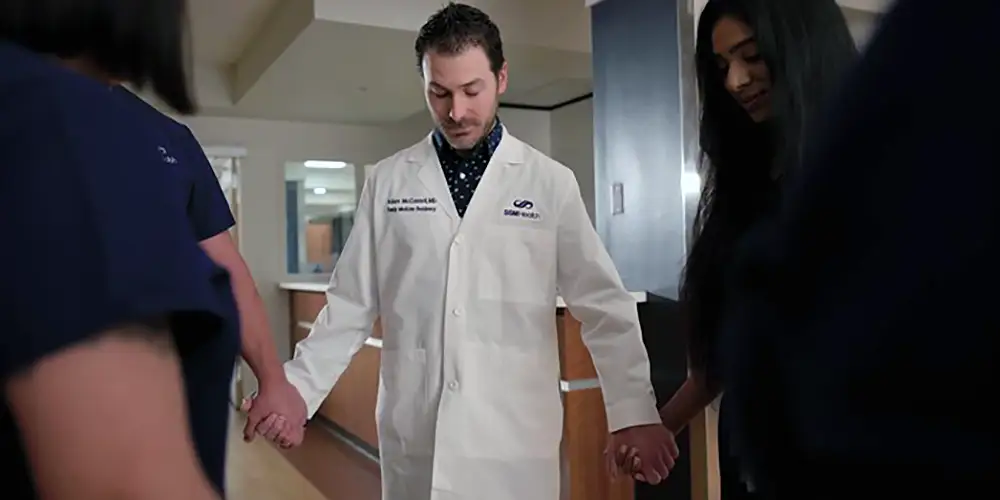
Many patients have deeply held spiritual or religious beliefs that significantly influence their coping mechanisms, decision-making processes, and perceptions of illness. By asking respectful, open-ended questions such as, "Do you have any spiritual or religious beliefs or practices that would be helpful for us to know about as we care for you?" we aim to understand their beliefs and values better. These open-ended questions are designed to help us understand how patients' spiritual beliefs influence their health and coping strategies, allowing us to tailor our care to better meet their needs. Some patients indicate they are not religious or spiritual but rely on family or friends for hope and strength during difficult times. These conversations help us provide care that aligns with each patient's values through continued dialogue or connecting them with hospital chaplains or their own clergy.
Resident Training
To equip residents to address the spiritual needs of patients, we provide dedicated training through workshops, didactics, informal conversations, and bedside teaching. Some residents may go on to become highly skilled in providing spiritual care, while others focus on identifying patient needs and referring to chaplains or the patients' clergy. Spirituality is deeply personal, and our residents come from diverse religious and non-religious backgrounds. Our goal is not to push our beliefs on anyone. Instead, we want to help residents learn to engage the spiritual dimensions of their patients with sensitivity, humility, and respect.
Supporting Resident Growth
During their three years of training, residents risk neglecting their personal well-being amidst clinical responsibilities. So, we encourage them to grow not only professionally but also personally and spiritually. Part of our mission is to develop residents who demonstrate Christ-like character; qualities such as self-sacrifice, wisdom, compassion, grace, and a servant's heart. These virtues should define every physician, regardless of their faith tradition. We don't dictate how that happens; we simply create space for it because we want our graduates to leave not just well-trained, but whole.
Tracks
- Residents will declare desire to participate in the Hospitalist track in last quarter of intern (R1) year.
- Residents will complete a total of 10 (up to 12) blocks of inpatient medicine rotations throughout residency:
- Four blocks of FMS months as R-1
- One block of FMS as R2
- One block of Bronze as R2
- One block of Flex inpatient
- Two blocks FMS as R3 One of these two blocks should be done as junior attending on FMS as an R3. The R3 acting as a Junior Attending is responsible for the following:
- One elective block with the intensivists.
- Residents will present one hospital medicine topic grand rounds during each of R-2 and R-3 years as a part of the program’s standard grand rounds requirements. Topic should not be one presented within last two years.
- Residents will participate in the weekend Bronze team call as a R2 and R3 as permitted by their training license.
- Residents will obtain access to and review the Principles and Practice of Hospital Medicine textbook by McKean et.al. through OSU access granted to all residents, an online Hospital Medicine journal, and Journal Watch free hospital medicine updates.
- Residents will attend quarterly Hospital Medicine noon lectures and the “Bread and Butter” hospitalist series.
- Discuss the Healthcare Systems competencies from the Society of Hospital Medicine website.
- Discussion about hospitalist employment options.
- Residents that complete the hospitalist track requirements will receive a Certificate of Achievement to acknowledge their additional training.
Purpose: To provide guideposts and direction for residents who want to prepare to become a medical missionary to medically underserved people internationally and/or in USA.
Mission track required elements:
- Read 80% of assigned articles/chapters in the two-year curriculum and participate in five of the eight monthly Missions Track discussion meetings. Helping without hurting and Ready Set GO are the 2 texts that we will be using.
- Participate in a missions conference once in 3 years.
- For two weeks or more serve alongside a physician working full-time among the underserved or long-term overseas missionary physician (i.e. separate from short-term team).
- Track curriculum is to be secondary to core ACGME and SAFMR residency requirements and a resident on probation may not be allowed to participate.
Purpose: To provide a focused educational experience for those residents that want to practice obstetrics on graduation.
Obstetrics track required elements:
- Will complete a total of 6 blocks of OB rotations throughout residency:
- Two block L/D SAH months as R-1
- One block L/D SAH month as R-2 supervising R-1
- One block high volume L/D for Flex rotation
- One block High-risk or Maternal Fetal Medicine
- One block Obstetrics elective
- Will assist in teaching the OB procedure conference
- Will perform or directly supervise 80 vaginal deliveries and if planning on doing c sections 50 c/s as 1st assist or primary surgeon. These 50 c/sections may not be enough to be credentialed at the resident’s future hospital. The resident will need to be aware of possible future employer’s requirements.
- Will present one OB topic grand rounds during each of R-2 and R-3 years as a part of the program’s standard Grand rounds requirements.
- Will obtain copy or access to the ACOG compendium guidelines and the primary obstetric text (Gabbe or Williams).
- Will meet once every other block to review a selected reading from the ACOG papers or primary text.
- Track curriculum is to be secondary to core ACGME and SAFMR residency requirements and a resident on probation may not be allowed to participate.