
Knee Pain
Knee pain is one of the most frequent complaints affecting people of all ages. Getting a proper diagnosis is an important first step to treating your knee pain.
To serve you better, please set your location for information on services available in your area.
What are the symptoms of knee pain?
Knee pain can be a sharp, dull, or throbbing discomfort in and around the knee joint. The pain can range in intensity from mild to severe and impact mobility. Common symptoms that may accompany pain in or around the knee joint include:
- Swelling and stiffness
- Redness and warmth to the touch
- Weakness or instability when walking
- Popping or crunching sound
- Inability to fully straighten the knee
Do you have knee pain? Take our online knee pain assessment to better understand your knee health.
What are common causes of knee pain?
Knee pain and injuries can happen at any time and any age. People can develop knee pain for many reasons and often fall into three categories:
Degenerative conditions
- Arthritis — When the knee joint gets sore and inflamed because the smooth covering on the bones wears away.
Injury
- Ligament injuries — A ligament connects bones together and keeps them in place. A knee ligament injury affects knee stability and makes it difficult to move or put weight on the knee.
- The most common ligament injury is an Anterior Cruciate Ligament (ACL) injury.
- You can also tear your:
- Medial collateral ligament (MCL) on the inner side of the knee
- Posterior cruciate ligament (PCL) which runs through the center knee joint
- Lateral collateral ligament (LCL) on the outer side of the knee
- A meniscus tear — A meniscus works like a brake pad between the thigh and shin bones. A tear can happen from a quick twist or turn.
- Fracture — Broken bones or fractures in the knee can cause severe pain.
- Patellar dislocation — A dislocated kneecap (patella) happens when the kneecap slips out of its groove.
- Chondral defect — Often from a twist or impact injury, the smooth covering at the end of the bones (cartilage) can become damaged.
Overuse
- Runner's knee — A dull pain around the kneecap that worsens with activity.
- Iliotibial band syndrome (ITBS) — A sharp pain on the outside of knee. It can worsen with activity.
- Patellar tendinitis — This causes inflammation in the tendon connecting the kneecap to the shinbone.
The CDC reports that nearly 37% of adults in the US have had lower-limb pain, including knee pain, in the last 3 months.2
Explore other knee health resources
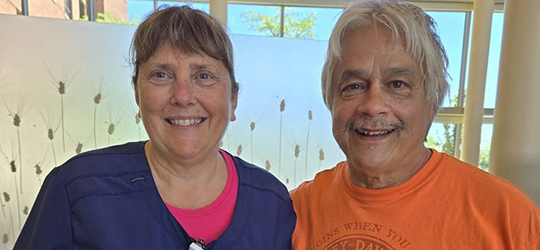
Perseverance and healing from knee pain: Scott's journey after decades of being on his feet
“I would just be done for the rest of the day, and in the end both of my knees were hurting because I was overcompensating with the good one,” he said.

Knee Pain Assessment
If knee pain is slowing you down, the orthopedic experts at SSM Health can get you back on your feet. Take our knee pain assessment.
How is knee pain diagnosed?
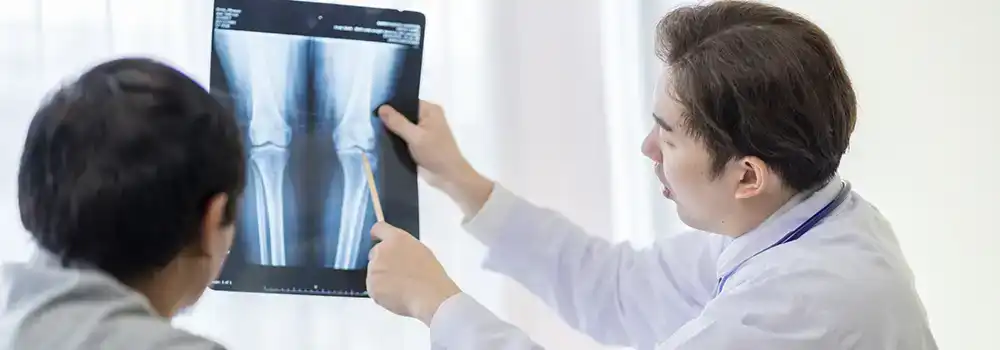
Diagnosing knee pain or injury involves a physical examination of the joint. Your provider will be looking for swelling, pain, tenderness, warmth, and visible bruising. They may also check the range of motion and stability of the knee joint. This is done by moving your leg in different directions and applying pressure to evaluate the integrity of the knee. Providers often order imaging tests to help identify specific injuries or conditions.
How is knee pain treated?
SSM Health offers a broad range of treatment options. Non-surgical treatment options are often the first line of defense for knee pain. Your doctor may prescribe one or more treatments. These options may include:
Lifestyle changes:
- Weight loss reduces stress on your knees and increases the function of these joints
- Exercise strengthens your muscles and improves movement and flexibility
Non-surgical treatment options:
- Cortisone injections help reduce mild, chronic pain and inflammation
- Braces and splints stabilize the knee and reduce the pain of arthritis
- Physical therapy works to strengthen the muscles around your joint(s)
- Anti-inflammatory medications and Tylenol help reduce swelling and pain
Surgical treatment options:
Arthroscopy is a minimally invasive procedure. Arthroscopy uses small cuts and special tools. These tools help fix or remove the damaged covering of the bone and joints.
Ligament reconstruction fixes or replaces a damaged ligament. It usually uses a graft from another body part or sometimes a tested cadaver. This restores stability and function to the affected joint.
This usually means making one or more large cuts to reach the problem area. It helps the surgeon work more precisely and is often used for complex procedures, like fixing serious bone breaks.
Partial replacement involves replacing only the damaged part of the joint. This preserves the healthy bone and the existing covering of the bone, called cartilage. It is not suitable for those with extensive damage.
Total joint replacement involves removing the damaged covering of the bone and the bone itself. New metal and plastic implants will offer smooth movement. Total joint replacement has a proven record for safety and success in reducing pain and improving mobility.
Common questions about knee injuries:
Many people have knee pain relief within a few days. This relief can last from several weeks to several months.
A doctor uses a cortisone shot or injection to relieve pain and inflammation in the knee. Cortisone is the general term for an anti-inflammatory medication which helps reduce inflammation and pain. Your doctor will decide if a cortisone shot is the best treatment option for your knee pain.
Knee pain can come from several issues. Sometimes, it’s due to ligament injuries, meniscus tears, arthritis, or patellar tendinitis. These problems can lead to severe and lasting discomfort. The knee will also swell and become unstable.
ACL injuries are the most common. This pain is often caused by sudden stops and changes in direction. Most ACL injuries happen while playing sports.
Knee pain can change the way you walk and how you stand. These changes can lead to hip and back pain in some cases.
A locked knee feels like a sudden inability to fully straighten or bend the knee. First, try rest and ice. If that doesn’t help, contact an orthopedic specialist. You could have a meniscus tear or severe arthritis.
Use ice for acute injuries to reduce swelling and pain. Use pain relievers such as nonsteroidal anti-inflammatory drugs (like ibuprofen and naproxen). Call your provider if knee pain continues.
The RICE formula
| R | Rest the injured area. |
| I | Ice the injury for 20 minutes at a time. Do not apply the ice directly to the skin. |
| C | Compress the injured area with a wrap. Do not pull the wrap or bandage tightly, as this can cut off circulation. |
| E | Elevate the injured area above the level of the heart. |
Changes in barometric pressure can thicken joint fluid. This can lead to muscle tightening. Wear warm clothing, use moist heat, and stay active while indoors.
Give your knee and body rest. You may ice your knee to reduce swelling and pain. Incorporate knee strengthening exercises into your exercise routine. Wear footwear that fits properly to help manage knee pain. Contact your SSM Health provider if the pain persists.
Do you have knee pain?
Take our knee pain assessment to better understand your knee health.
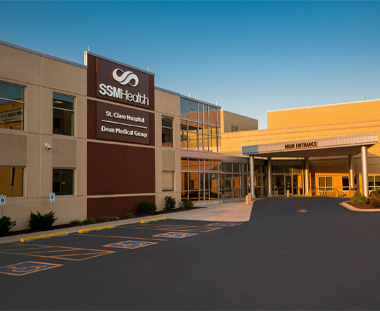
SSM Health Dean Medical Group - Orthopedics - Baraboo

SSM Health Dean Medical Group and SSM Health Fond du Lac Regional Clinic - Orthopedics - Beaver Dam

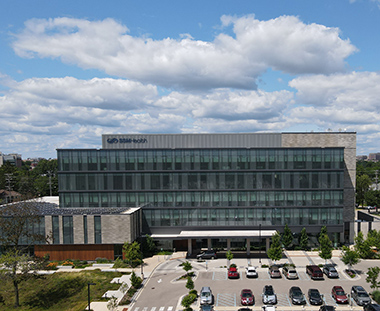
SSM Health Orthopedics - South Madison Campus
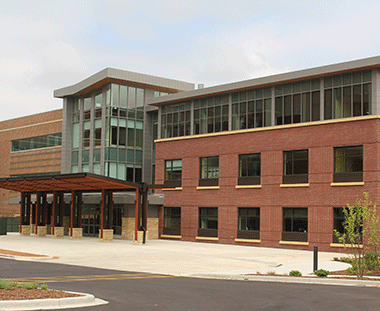
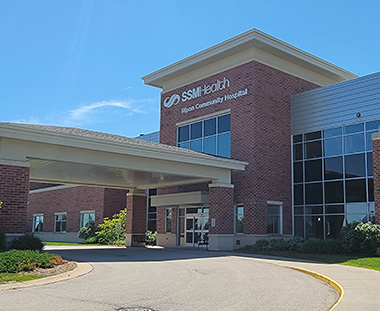
SSM Health Fond du Lac Regional Clinic - Orthopedics - Ripon
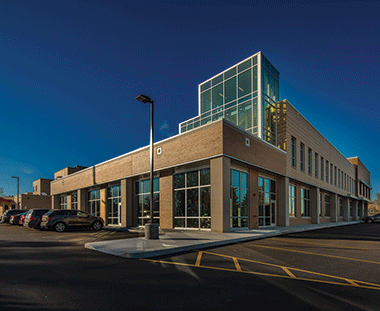
SSM Health Fond du Lac Regional Clinic - Orthopedics - Waupun
- Knee pain - Symptoms and causes. (n.d.). Mayo Clinic. https://www.mayoclinic.org/diseases-conditions/knee-pain/symptoms-causes/syc-20350849
- Lucas, J., Connor, E., & Bose, J. (2021). Back, lower limb, and upper limb pain among U.S. adults, 2019. NIH News in Health. https://doi.org/10.15620/cdc:107894