
Shoulder Pain
As a ball-and-socket joint, your shoulder has the greatest range of motion of any joint in your body. It is a prime site for arthritis and injuries, such as rotator cuff tears and dislocations.
Overuse shoulder conditions become more prevalent with age. Shoulder injuries are also common among athletes, especially throwers.2 When left untreated, injuries can sometimes turn into long-term problems.
What are symptoms of shoulder pain?
Some shoulder pain may be minor or short lived and can be handled by over-the-counter pain relievers, applying heat or cold, and rest. Others may be a reason to visit an orthopedic specialist or sports medicine specialist, including:
- A sudden injury from a fall or lifting a heavy object
- Shoulder pain that keeps you from lifting your arm above your shoulder or putting your arm behind your back
- Pain that causes difficulty with sleeping or daily activities
- Pain that does not improve with over the counter medications, rest, ice, and heat
To serve you better, please set your location for information on services available in your area.
What are some of the most common reasons for shoulder pain?
Shoulder pain is usually due to overuse, aging, or injury. Any sport or job that requires repeated movement of the upper arm can hurt parts of the shoulder, like the rotator cuff— a group of muscles and tendons that help keep the shoulder stable.
Shoulder Conditions
- Arthritis — There are two joints in the shoulder that can develop arthritis. This is usually due to aging.
- Acromioclavicular (AC) joint injuries — This often occurs from a fall onto the side of the shoulder. This leads to the collarbone separating from where it meets the shoulder blade, resulting in pain. Most AC separations are a minor injury and do not require surgery.
- Frozen shoulder (adhesive capsulitis) — If you have severe pain and can’t move your shoulder, you could have a frozen shoulder.
- This occurs when the connective tissues and ligaments that surround the shoulder joint thicken and become stiff.
- It’s common in people with certain health conditions, like diabetes. It also happens to those who haven’t been able to move their shoulder for awhile because of an injury or previous surgery.
- Rotator cuff injuries — This is one of the most common shoulder issues doctors see. Injury is often due to repeatedly reaching over your head (as in throwing a ball). Rotator cuff injuries are more common with age and repetitive lifting overhead.
- Shoulder impingement —This is a condition where the muscles and tendons that brace the shoulder become compressed. This can limit your range of motion and cause discomfort.
- Impingement can lead to tendonitis or bursitis, and long-term rotator cuff problems.
- Shoulder dislocations — This occurs when the ball dislocates from the shoulder socket. The shoulder socket is relatively shallow. This makes the shoulder one of the most commonly dislocated joints in the body. When the shoulder dislocates, the soft tissues that deepen the socket, called the labrum, typically tear. These don’t heal well on their own.
- Hill-Sachs lesion — This is a dent in the bone caused by a shoulder dislocation that presses the humerus bone against the socket.
- Younger patients may require surgery to stabilize their shoulder after a dislocation.
- In older patients, a rotator cuff tear can occur. Older patients who sustain a rotator cuff tear from a dislocation, may need surgery to repair the torn tendon.
Explore other shoulder care resources

How to stay safe while playing baseball
Learn more about how to avoid common baseball injuries in young athletes.

Why timing matters for joint replacement surgery
Modern techniques help you return quickly to the activities you enjoy
How is shoulder pain diagnosed?
Your doctor will ask questions about the type and frequency of the pain you are experiencing and perform a thorough physical exam. If required, an X-ray, MRI, or an other form of imaging may be used to isolate the problem.

How is shoulder pain treated?
We understand that every patient has individual needs and goals for orthopedic care. We will work with you to develop a personalized treatment plan that respects your lifestyle and priorities.
Lifestyle changes:
- Exercise can strengthen your muscles and improves motion and flexibility to the joint.
Non-surgical treatment options:
A non-surgical approach is often the first line of defense for shoulder pain. Treatment often begins with rest, over-the-counter medications, and the use of heat or cold therapy. Depending on your situation, your doctor may also recommend one or more of the following:
- A shot of cortisone may relieve mild, chronic inflammation and pain.
- The shoulder can benefit from the stabilization and support a brace or splint can offer.
- Depending on the situation, it may allow you to continue using the joint in activities and daily life.
- Physical therapy offers a combination of exercise and stretching. This can reduce pain and increase flexibility of muscles around the affected joint.
- Tylenol and anti-inflammatory medications can help reduce pain.
Surgical treatment options:
If your pain is more severe, surgery may be necessary to provide relief. At SSM Health, we prioritize minimally invasive shoulder procedures whenever possible to support a faster recovery.
Arthroscopy is a minimally invasive procedure. Arthroscopy uses small cuts and special tools. These tools help fix or remove the damaged covering of the bone and joints.
This usually means making one or more large cuts to reach the problem area. It helps the surgeon work more precisely and is often used for complex procedures, like fixing serious bone breaks.
Partial replacement involves replacing only the damaged part of the shoulder joint. This preserves the healthy bone and the existing covering of the bone, called cartilage. It is not suitable for those with extensive damage.
Anatomical shoulder replacement involves removing the damaged covering of the bone and the bone itself. New metal and plastic implants will offer smooth movement. This surgery has a proven record for safety and success in reducing pain and improving range of motion.
Learn more about total joint replacement.Unlike anatomical shoulder replacement, the surgery reverses the ball and socket. The surgery places the ball on the shoulder blade and the socket on the upper arm bone. It is safe and effective with a low rate of complications.
Common questions about shoulder injuries:
Pain may worsen at night due to your sleeping position and increased stiffness from lack of movement. Avoid sleeping on your affected side and use pillows to keep your shoulder in a neutral position. An anti-inflammatory medication or topical gel used before bedtime may offer some relief.
Initially, your shoulder will go through a “freezing” stage. This is when any movement becomes painful and your shoulder mobility declines. It can last for up to nine months before it reaches its peak “frozen” stage.
Warming up your muscles is key to preventing injury. A shoulder stretch might include:
- Cross one arm over your body and hold with the opposite hand.
- Hold for 30 seconds and breathe
- Repeat on the opposite side.
Do you have pain in your shoulder?

SSM Health Dean Medical Group - Orthopedics - Baraboo

SSM Health Dean Medical Group and SSM Health Fond du Lac Regional Clinic - Orthopedics - Beaver Dam


SSM Health Orthopedics - South Madison Campus


SSM Health Fond du Lac Regional Clinic - Orthopedics - Ripon

SSM Health Fond du Lac Regional Clinic - Orthopedics - Waupun
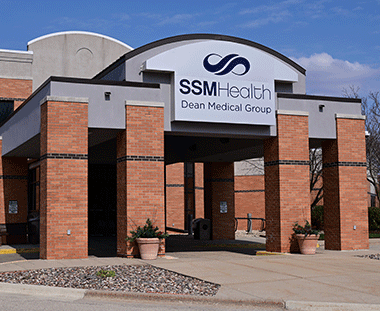
SSM Health Dean Medical Group - Orthopedics - Sun Prairie
1. Kiel, J., Taqi, M., & Kaiser, K. (2022, September 24). Acromioclavicular joint injury. StatPearls - NCBI Bookshelf. https://www.ncbi.nlm.nih.gov/books/NBK493188/