
Hip Pain
If you are experiencing chronic hip pain, you are not alone. Hip pain can happen to people of any age and is relatively common among young, active adults. It’s estimated that 30-40% of adults who play sports suffer chronic [hip] pain, as do 12-15% of adults over 60.1
To serve you better, please set your location for information on services available in your area.
What are the symptoms of hip pain?
People with hip pain often feel it in the front of the hip, near the groin. Other symptoms that can be associated with hip pain or injury include:
- A snapping or popping sensation in the front or on the side of the hip
- Stiffness in your hip
- Trouble walking or bearing weight
- Difficulty with squatting down
Take our online hip pain assessment to better understand your hip health and receive recommended next steps.
What causes hip pain?
Hip pain and injuries can happen at any time and any age. People can develop hip pain for many reasons, such as hip joint degeneration (arthritis) or getting injured playing sports. Hip pain and injuries generally fall into four categories:
Muscle and tendon injuries
- Hamstring injuries — A common type of strain that occurs in the tendons and muscles at the back of the thigh. This can cause pain in the hip when the injury is high in the muscle where it attaches to your pelvis.
- In more severe cases, the hamstring tendons can tear off the bone in the hip.
- Hip abductor injuries — A strain or tear of the gluteal muscles on the side of your hip.
- These muscles are important for walking.
- Hip flexor strain — The front hip muscles can become overstretched or overused. This can result in pain, spasms, bruising, or swelling when bending at the hip or lifting the leg.
Abnormal joint development
These disorders are a result of an abnormal shape of the ball and socket that make up the hip joint. These abnormalities may first become apparent on X-rays in adolescence though they may not cause pain for many years after that. Over time, patients can develop arthritis.
- Hip impingement — This condition occurs when the ball and socket of the hip do not fit together properly. The socket may be too deep and/or the ball may not be completely round. Because of this, the bones can rub or pinch against each other—especially during movements like squatting or bending. Over time, this can cause damage in the hip:
- Labrum tears — The labrum is a soft tissue that forms a ring around the hip socket. This keeps the ball moving smoothly within the socket. It can be torn with hip impingement.
- Cartilage tears — Cartilage is the smooth covering of the ball and socket in the hip. The cartilage in the hip can also be injured from the bones pinching in hip impingement.
- Hip dysplasia — A condition (often from birth) where the socket portion of the hip joint doesn’t completely cover the ball because it is too shallow. It can result in painful hip instability.
Explore other hip health resources

Anterior hip replacement puts high school coach back in the game
"This can be a more efficient, minimally invasive approach, which can often lead to a quicker recovery.”

Softball coach says her ortho care was a home run
’What an amazing community, an exceptional facility, an expert doctor and an immense support system from start to finish.’

Why timing matters for joint replacement surgery
Modern techniques help you return quickly to the activities you enjoy

Hip Pain Assessment
If hip pain slowing you down, the orthopedic experts at SSM Health can get you back on your feet. Take our health assessment.
Degenerative conditions
As your body ages, you may develop a chronic, progressive condition in your hip. This can cause deterioration of the bone and joint structures, which can lead to pain or injury.
- Arthritis — Of the 100 or so types of arthritis that impact the musculoskeletal system, osteoarthritis is among the most common. It’s estimated that one in four people will develop hip osteoarthritis with pain during their lifetime. 2
- Osteoporosis — Osteoporosis itself does not cause pain. But, the hip is a common site for osteoporosis-related bone breaks.
- It is important to periodically check your bone density with a DEXA scan. This scan can help to determine your risk of a hip fracture.
Repetitive injuries
The location and function of your hip joint makes it a prime location for injuries and disease caused by repetitive stress. These can also lead to hip joint pain and snapping you can feel and sometimes hear.
- Hip bursitis and IT band syndrome — The bursa is a fluid-filled sac found between bone on the side of your hip and an overlying soft tissue band known as the IT band.
- It is important to allow smooth motion on the side of your hip.
- The bursa can become inflamed and painful. If too tight, the IT band can cause painful snapping on the side of your hip.
- Hip flexor strain — Hip flexor snapping occurs when the strong hip flexor in the front of your hip snaps over the ball of the hip joint.
- This can occur at young active ages especially those patients that are very flexible.
- It is also common in older patients who have had a hip replacement where the tendon snaps over the new hip ball replacement.
How is hip pain diagnosed?
Your doctor will ask questions about the type and frequency of pain you are experiencing and perform a thorough physical exam. If required, an X-ray, MRI, or other type of imaging may be used to isolate the problem.
What are treatment options for hip pain?
At SSM Health, we understand that every patient is different and has individual goals for orthopedic care. We will work with you to develop a personalized treatment plan that respects your lifestyle and priorities.
Lifestyle changes:
- Weight loss reduces stress on your hip and can relieve pain and increase function.
- Regular exercise offers a variety of benefits for people with hip problems. It can be used to:
- Strengthen your muscles
- Help stabilize your core
- Increase your range of motion
- Improve flexibility
Non-surgical treatment options:
- Cortisone provides fast relief for inflammation from conditions like bursitis. The injection may relieve pain for several weeks and can be repeated up to three times per year.
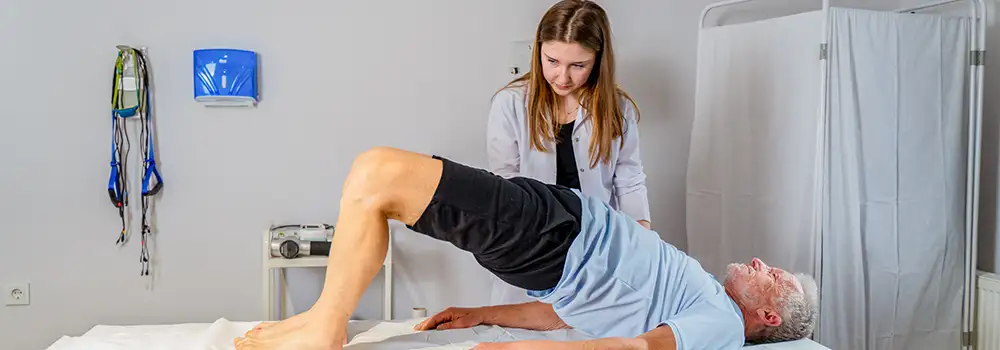
- Physical therapy can reduce pain and increase flexibility of the hip joint.
- Tylenol and anti-inflammatory medications can help reduce pain and inflammation in your hip.
Surgical treatment options:
For more severe pain, you may need surgery to find relief. SSM Health uses minimally invasive techniques whenever possible. Robotic-assisted surgery is also used in some situations, including hip replacement surgeries.
Arthroscopy is a minimally invasive procedure. Arthroscopy uses small cuts and special tools. These tools help fix or remove the damaged covering of the bone and joints.
This usually means making one or more large cuts to reach the problem area. It helps the surgeon work more precisely and is often used for complex procedures, like fixing serious bone breaks.
The hip is a common site for osteoporosis-related bone breaks. A partial hip replacement is typically only used for these types of hip fractures.
Partial replacement involves replacing only the damaged part of the hip when the ball is intact. This preserves the healthy bone and the existing covering of the bone, called cartilage.It is not suitable for those with extensive damage.
Total hip replacement involves removing the damaged covering of the bone and the bone itself. New metal and plastic implants will offer smooth movement. Total hip replacement has a proven record for safety and success in reducing pain and improving mobility.
Do you have pain in your hip?
Common questions about hip pain:
Yes. The knee and hip are connected through muscles, tendons, and nerves, making it possible for arthritis pain in the hip to radiate to the knee. IT Band syndrome occurs when the iliotibial band that runs down outside of your leg gets irritated or swollen. It is a common problem for athletes.
Yes. Arthritis in your hip, or a hip impingement, can also affect your lower back. Poor posture, limping while you walk, injury, or strain could also cause pain in both areas.
One simple and effective stretch for hip flexor pain is to kneel on the affected leg and place the other foot flat on the ground in front of you. Slowly push your hips forward while keeping your back straight. Hold the position for 15-30 seconds. Release and repeat.
If hip pain only happens at night, your sleeping position or mattress may be the cause. This is more likely to occur if you sleep on your side. Other conditions like osteoarthritis, hip flexor strain, or bursitis also cause pain throughout the day, but you may be more aware of it at night.

SSM Health Orthopedics - South Madison Campus

SSM Health Dean Medical Group - Orthopedics - Baraboo
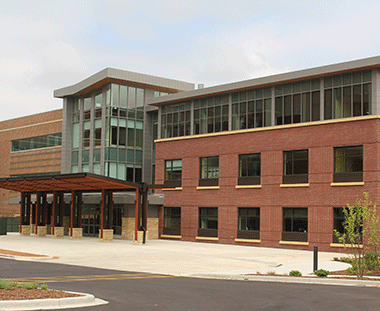

SSM Health Dean Medical Group and SSM Health Fond du Lac Regional Clinic - Orthopedics - Beaver Dam
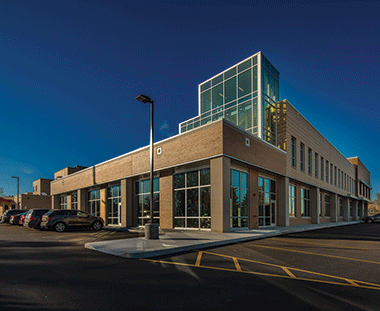
SSM Health Fond du Lac Regional Clinic - Orthopedics - Waupun


SSM Health Fond du Lac Regional Clinic - Orthopedics - Ripon
- Chronic hip pain in adults: Current knowledge and future prospective Journal article https://pmc.ncbi.nlm.nih.gov/articles/PMC8022067/#ref1
- Murphy, L., Helmick, C., Schwartz, T., Renner, J., Tudor, G., Koch, G., Dragomir, A., Kalsbeek, W., Luta, G., & Jordan, J. (2010). One in four people may develop symptomatic hip osteoarthritis in his or her lifetime. Osteoarthritis and Cartilage, 18(11), 1372–1379. https://pmc.ncbi.nlm.nih.gov/articles/PMC2998063/